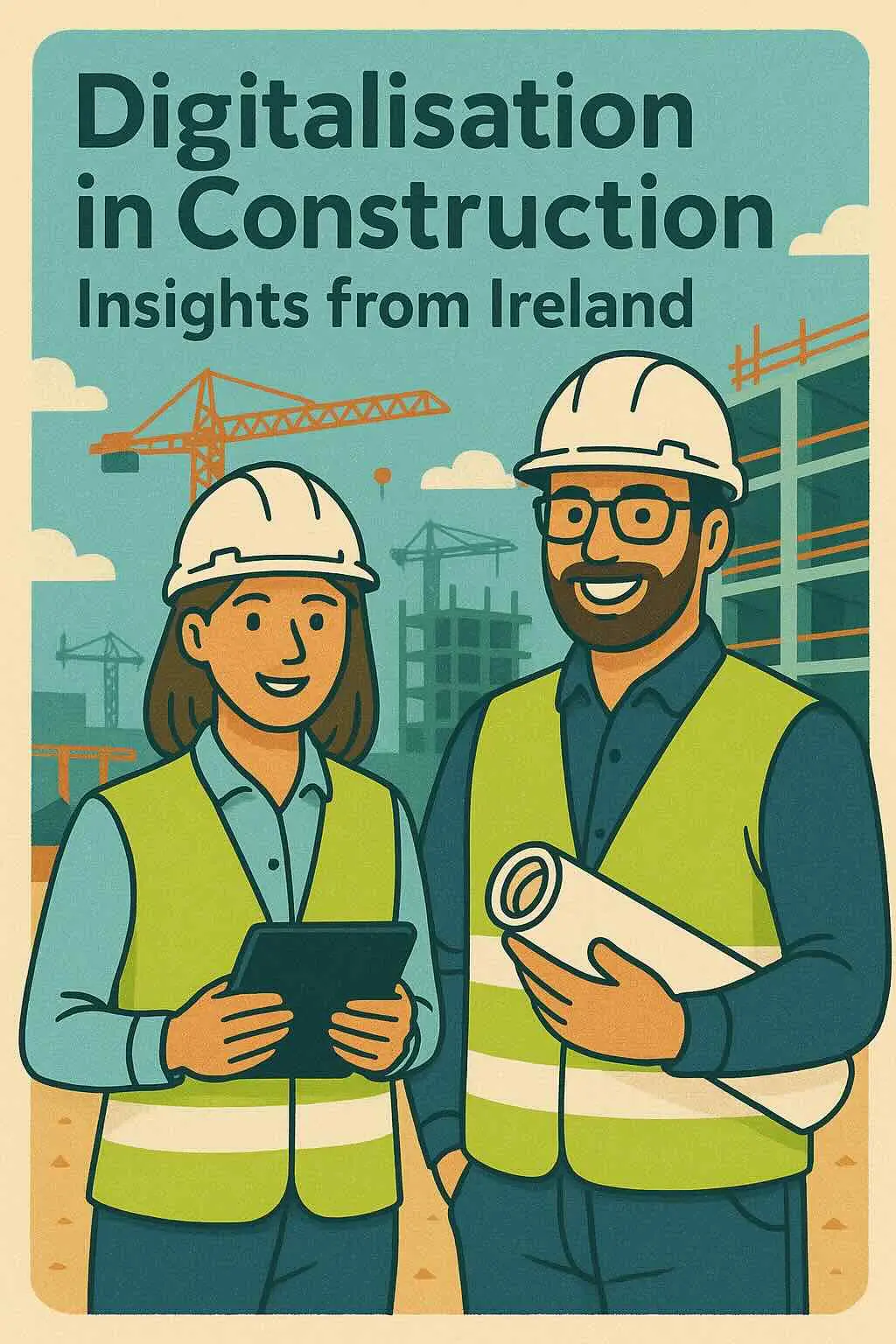
From AI-enabled planning to off-site fabrication, the digitalisation of Ireland’s construction sector could unlock more inclusive opportunities—if we act now.
Ireland’s construction industry is changing fast—but can its workforce keep up?
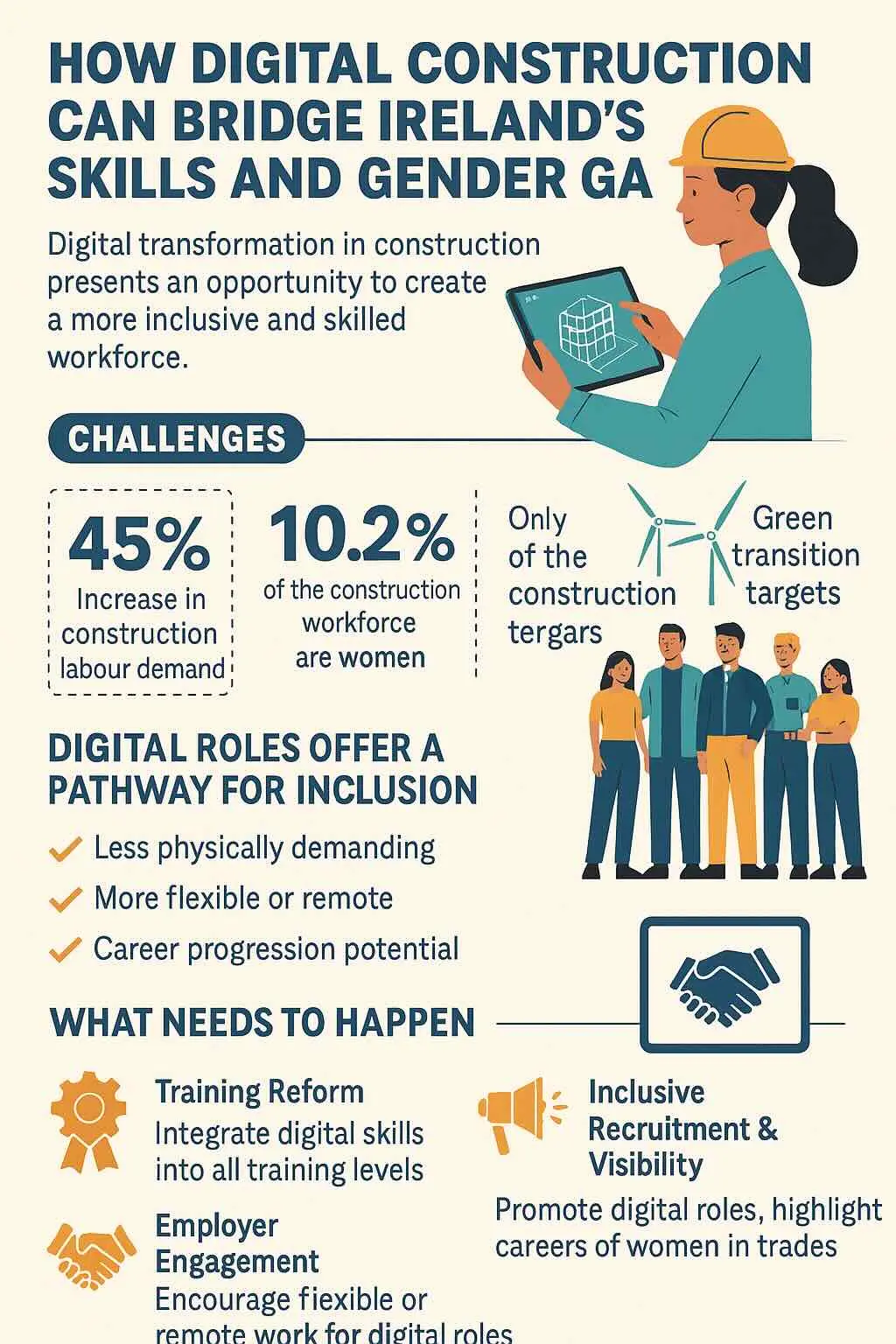
The country faces mounting pressures: a 47% increase in labour demand, accelerating green transition targets, and a growing need to attract underrepresented talent, especially women. These overlapping challenges were front and centre in the WEC (Women Empowered in Construction) project’s latest research, and they all point in the same direction: digital transformation isn’t just a technical shift. It’s a social one.
From Building Information Modelling (BIM) to modular off-site fabrication, modern construction methods are no longer futuristic. But as Joan McNaboe of SOLAS notes, “digital tools are largely confined to bigger companies.” Smaller firms, who make up the bulk of Ireland’s construction sector, often lag in adoption, mainly due to training gaps and cost barriers.
Yet, this digital divide also presents a golden opportunity. Integrating digital tools into early-stage training and apprenticeships could equip a new generation of workers, including those currently underrepresented, with in-demand skills from day one.
One standout insight from the research? Digital roles are more accessible and attractive to women.
Interviewees highlighted how roles such as BIM technician, digital site planner, and virtual design coordinator are:
These are precisely the factors that could encourage more women, parents, and career changers to enter the sector – especially if training is flexible, modular, and visible through career awareness campaigns.
Despite persistent gender imbalances (only 10.2% of the workforce are women), there are signs of positive change:
As Jeanette Mair (CIF) puts it: “There’s a shift happening. We’re seeing more women excited about roles in digital construction and design – jobs that offer flexibility and creativity, not just physical labour.”
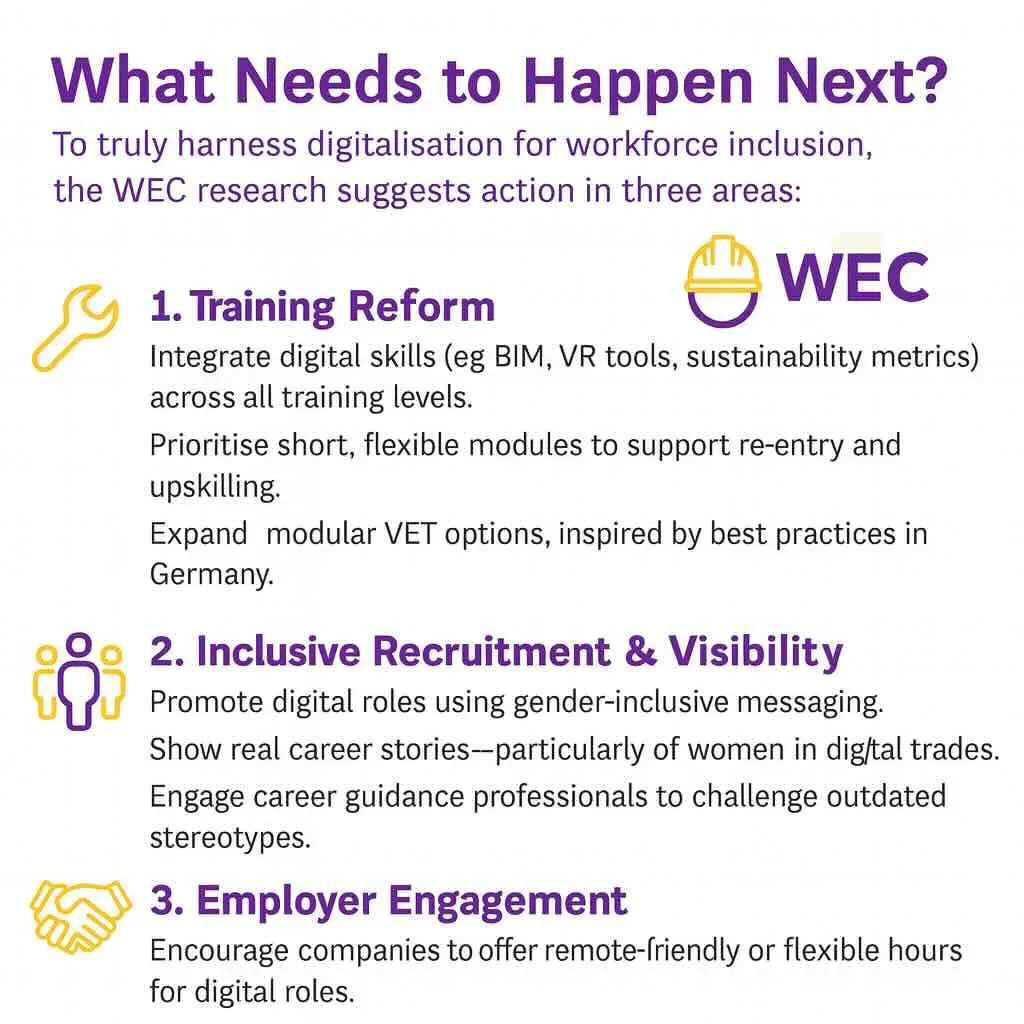
To truly harness digitalisation for workforce inclusion, the WEC research suggests action in three areas:
Construction has always been about shaping the future, quite literally. But now, Ireland has the chance to shape not just buildings, but a workforce that’s more skilled, more inclusive, and better equipped for the green and digital transitions.
As the WEC research shows, digitalisation isn’t just about tech. It’s about redefining who belongs on the construction site, and in the decision-making room.

Funded by the European Union. Views and opinions expressed are however those of the author(s) only and do not necessarily reflect those of the European Union or the European Education and Culture Executive Agency (EACEA). Neither the European Union nor EACEA can be held responsible for them.