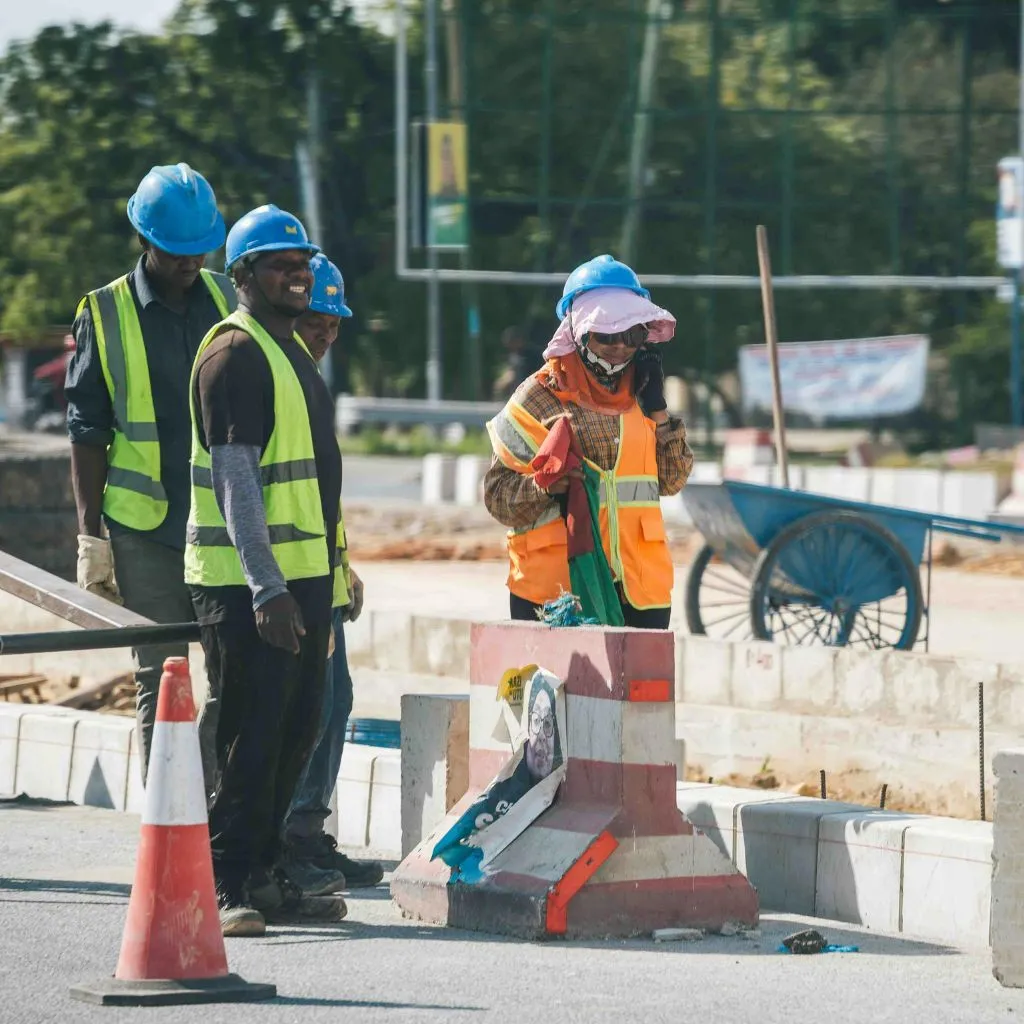

Construction is one of Europe’s most male-dominated sectors. In Croatia, women make up less than 12% of the construction workforce, and fewer still reach site management, engineering leadership or senior roles. For a woman on a construction site or in a project office, leadership and professional development are not abstract ideals – they are the practical means of being taken seriously, running the work effectively, and building a lasting career in an environment that was not originally designed with her in mind.
Crucially, the barriers are rarely about capability. A woman can read a drawing, manage a programme or lead a crew as well as anyone. The real challenges tend to be visibility, establishing credibility with trades and subcontractors, being the only woman in the room, and gaining access to the mentors, networks and development opportunities that move a career forward. This article looks at what leadership and professional growth actually mean for women in construction – on site, in the office, and across a whole career.
In construction, leadership is often pictured as the site manager or project director. In reality it appears far earlier and far more widely. A site engineer coordinating trades at the morning briefing, a forewoman keeping a crew on programme, a quantity surveyor holding a subcontractor to the contract, an apprentice who stops work to flag an unsafe practice – each of these is an act of leadership. It is not reserved for the person with the most senior title.
Leadership is a competence built through practice, feedback and experience, not a personality trait a person is born with. This matters especially in construction, where authority is still assumed to look like an older man in a hi-vis vest. A woman who runs a clear toolbox talk, resolves a clash between two trades or calmly manages a delay is already leading – whatever her job title, and long before any formal promotion. Recognising these everyday moments as leadership is the first step to developing it deliberately.
Leading others begins with the ability to lead yourself, and in construction that self-leadership is tested by frequently being the only woman on site. Four things matter in particular. Personal values – deciding what kind of professional you want to be on site – turn difficult decisions into deliberate choices. Emotional intelligence helps you stay composed under time and safety pressure, and when you are underestimated or met with site banter. Limiting beliefs specific to the sector (“I’ll be seen as not tough enough,” “I don’t look like a site manager”) hold many capable women back until they are named and challenged. And a clear professional identity – owning your place as an engineer, tradeswoman or manager rather than an outsider – provides stability when the environment does not automatically affirm your presence.
Women who have built careers in construction often describe the same arc: being underestimated, doubting themselves, and then gradually earning credibility and confidence through competence and consistency. Confidence, in these accounts, is never the starting point. It is the result of doing the work well, again and again, until both you and those around you stop questioning whether you belong.
If self-leadership is the inner foundation, communication is where leadership becomes visible – and on a construction site, communication has real consequences for safety, programme and cost. A helpful way to think about it is a scale from passive to aggressive, with assertive communication in between. Passive communication leaves concerns unspoken, which on site can mean a safety risk or a delay that no one raised. Aggressive communication may force a short-term result but damages the working relationships you depend on for the next six months. Assertive communication – clear, direct and respectful – is the register that earns lasting respect on site.
On the ground A young site engineer gives a subcontractor a clear instruction; it is ignored until a male colleague repeats the same words. This is a common experience – and it is not a personal failing. Understood as a communication and leadership challenge to be developed, the response is to keep instructions clear and specific, follow up in writing, build a track record of being right, and let consistent competence do the convincing over time. |
Professional presence follows the same logic. Credibility with trades and subcontractors is not won by imitating a masculine style; it is earned by knowing your work, being consistent, and communicating clearly. Presence is built through practice and self-awareness, which means it is fully within reach of anyone willing to develop it.
Construction already runs on work-based learning. Trades are taught through apprenticeships; engineers and managers learn on real sites, alongside a foreman or a senior colleague. Leadership and confidence develop in exactly the same way – through genuine responsibility, not classroom theory. The most effective development comes from taking on stretch tasks: chairing a coordination meeting, managing a small work package, or running a section of the works, and then reflecting honestly on what worked, how the crew responded, and what to do differently next time.
That reflection is what turns everyday site experience into lasting professional growth. Without it, experience simply accumulates; with it, each project becomes a source of deliberate learning and a step towards the next role.
Professional success is rarely achieved alone, and this is especially true in a sector with so few visible women. Mentoring is invaluable: a mentor who has navigated site culture can offer honest feedback and practical guidance that would otherwise take years to acquire. Just as important are sponsors — people who put your name forward for the next project or promotion when you are not in the room. Both are worth seeking out deliberately.
Women-in-construction networks add a further layer of support. Connecting with peers across companies and countries reduces isolation, normalises shared experiences, and provides practical advice on everything from site facilities to negotiating a new role. Mentoring also works in both directions: experienced women who mentor apprentices and students strengthen their own leadership while becoming the visible role models the sector badly needs.
Professional development in construction is concrete and structured, which is an advantage. Careers progress along clear routes: from a skilled trade into supervision and site management; or from graduate engineer to site engineer, then project manager, and on to senior or chartered status. Each step is supported by recognised qualifications and certifications — trade tickets, site-management and safety credentials, and professional membership – that make progression visible and portable.
The key is to treat development as intentional rather than something that simply happens. A few practical steps make a real difference:
Leadership and professional development for women in construction are not about becoming someone else in order to fit the site. They are about leading as yourself – with competence, clear communication and hard-earned confidence – and deliberately building a career in a sector that needs more women at every level, from the trades to the boardroom.
When women grow as leaders and professionals, they do not only advance their own careers. They make construction more open, more capable and more balanced for those who follow – and they help build a sector that is stronger for having them in it.

Funded by the European Union. Views and opinions expressed are however those of the author(s) only and do not necessarily reflect those of the European Union or the European Education and Culture Executive Agency (EACEA). Neither the European Union nor EACEA can be held responsible for them.