Animated video guides for educators
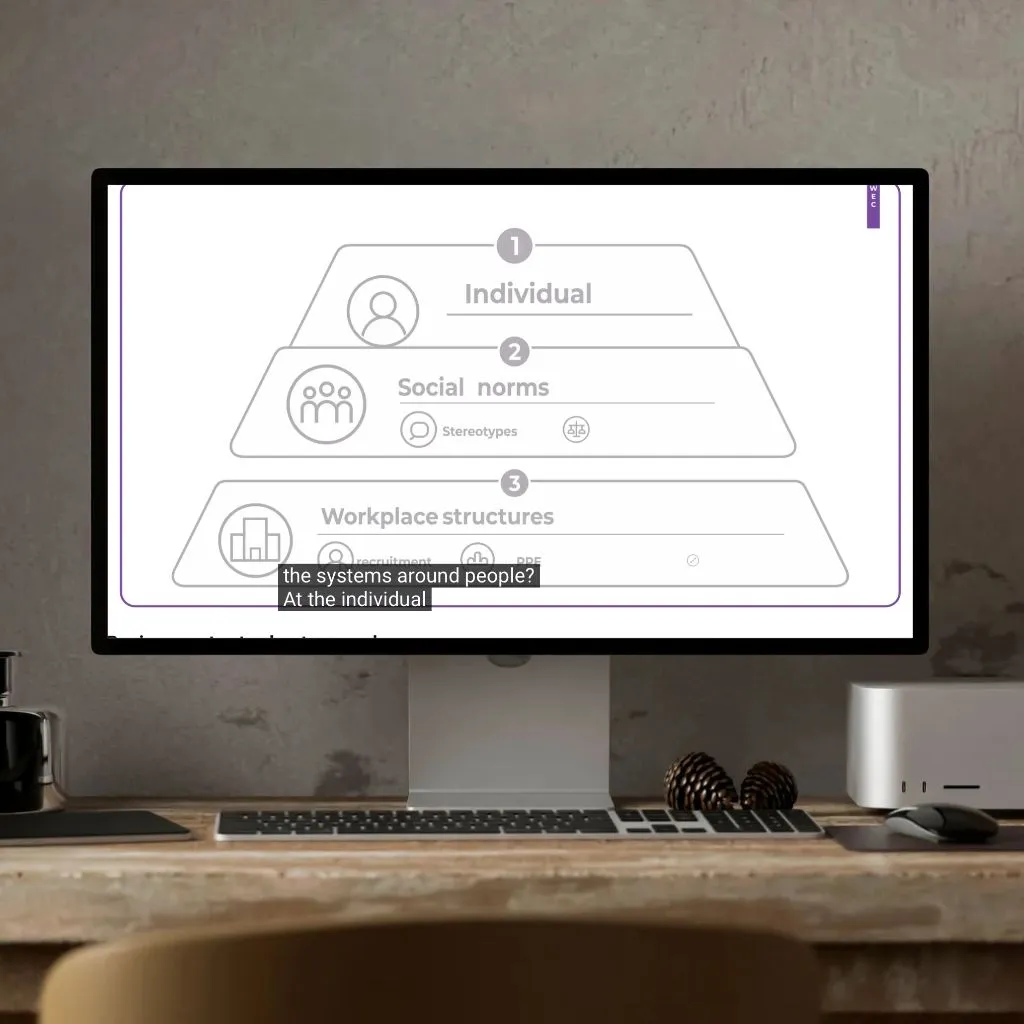
Deliverable D4.2 provides educators with a set of short animated video guides that illustrate key concepts of the WEC VET curriculum in an accessible, visual format. In line with the Grant Agreement, the deliverable consists of 12 minutes of animation, produced as 12 one-minute guides – three for each of the four curriculum modules.
Each guide follows the same five-part structure and closes with a practical educator prompt, so it can be used directly in classroom settings, workshops and online learning. The videos are produced in English and published on the public WEC YouTube channel, from where they are embedded in the WEC platform and shared through partner channels. Translations will be provided as subtitles in the six languages of the partnership (German, Lithuanian, Albanian, Bosnian, Croatian and Montenegrin).

Breaking down gender barriers in construction requires more than raising awareness — it demands practical skills, inclusive teaching approaches, and real opportunities for women to build successful careers. This comprehensive Training Manual, “Promoting Gender Equality, Professional Competence and Entrepreneurship for Women in the Construction Sector”, equips educators, trainers, and VET providers with structured learning sessions, interactive activities, and practical guidance to turn gender equality into everyday professional practice.
Developed within the Women Empowered in Construction (WEC) project, the manual combines gender-sensitive vocational education, experiential learning, real-world scenarios, and competence-based development to address workplace discrimination, strengthen professional confidence, and foster leadership and entrepreneurship. Designed for flexible use across formal, non-formal, and blended learning environments, it provides a practical roadmap for empowering women, transforming workplace cultures, and building a more inclusive, skilled, and future-ready construction workforce.

The WEC project has developed a comprehensive vocational education and training toolkit for learners, VET educators, and construction companies working toward gender equality in the sector. This post presents all sixteen tools across Modules 1–4, now available in interactive digital format.
Each tool has been digitised from the original print-based WEC Toolkit and rebuilt as a standalone, browser-based interactive resource. They run directly in any web browser with no installation required, work on desktop and mobile, and are designed for both self-guided use and trainer-led sessions. Where tools include personal reflection, planning, or completed records, users can save their work as a PDF directly from the browser — no personal data is collected or stored.
Module 1: Gender Equality and Workplace Culture brings together four tools that address inclusion at the organisational and individual level. Tool 1 helps construction companies run a structured self-audit across eight inclusion dimensions and identify concrete priority actions for the next 90 days. Tool 2 supports learners in recognising and distinguishing bias, discrimination, and harassment through scenario analysis, a myth-buster with flip cards, and a take-home rights summary. Tool 3 uses eight realistic on-site scenario cards to practise response and reasoning before revealing what each option tends to achieve. Tool 4 guides learners through personal goal-setting, an allyship checklist, and a signed pledge with a built-in review date.
Module 2: Career Development covers four tools focused on professional growth and workplace skills. Tool 5 maps four career routes in construction across four stages, shows how they connect, and helps learners plan a realistic next step with a personal Goals Map. Tool 6 combines a soft-skills self-assessment wheel — which visualises strengths and gaps across six leadership areas — with project-management fundamentals and an interactive Gantt planner. Tool 7 is a communication playbook covering assertiveness, the three-part message structure, script cards for common site situations, and a structured conversation planner. Tool 8 helps learners build an interactive support network map, understand the different roles of mentors, sponsors, and peers, and develop a personal resilience plan.
Module 3: Health and Safety from a Gender Perspective provides four tools that apply both standard and gender-sensitive lenses to site safety. Tool 9 walks through the five-step risk assessment cycle, adds a gender lens at each step, identifies six hot spots where construction risks fall unevenly, and includes an interactive worksheet for assessing a real task. Tool 10 covers the full hierarchy of controls, explains why PPE fit is a safety issue rather than a comfort one, and provides a head-to-toe interactive fit check for every item. Tool 11 is a dual-lens safety walk covering both physical conditions and inclusive culture, with a structured record sheet for observations, owners, and actions. Tool 12 explains what is worth reporting, why near-misses are the most valuable reports, and how to build a no-blame reporting culture — with an interactive hazard pyramid and a simple report form.
Module 4: Technical Skills and Entrepreneurship covers four tools that support learners in building future skills and, for those who choose it, starting their own work. Tool 13 maps the four areas of future skills in construction — digital, green, modern methods, and the human core — with an interactive skills map that tracks what you have, what you are building, and what you want to learn, plus a one-skill action plan. Tool 14 demystifies entrepreneurship, compares employment, subcontracting, and self-employment honestly, and provides a nine-box Business Model Canvas structured around four plain questions. Tool 15 combines financial literacy and marketing in one tool, with a smart money calculator that auto-calculates what is left after costs and set-aside, and a practical customers plan. Tool 16 is the final tool in the toolkit: it covers the legal basics of starting out, provides a one-page business plan template, and includes an interactive launch checklist with group-by-group progress tracking and a support map.

A structured self-audit that scores your organisation's inclusion of women across eight dimensions and identifies priority actions for the next 90 days.

A self-study pack that builds the skill of recognising bias, discrimination, and harassment in everyday construction-sector situations, including scenario analysis, a myth-buster, and a rights summary.

Eight realistic construction scenarios, each with three possible responses — choose your answer, then reveal what each option tends to achieve in practice.

A personal worksheet for turning learning into action: set one or two goals, select allyship commitments, and sign a pledge to do one thing differently.

An interactive career map across four construction routes and four stages, showing how paths connect and helping learners plan a realistic next step.

A dual leadership toolkit covering the soft skills to lead yourself — with an interactive self-assessment wheel — and the project-management basics to plan and run a job.

A practical playbook of communication frameworks, script cards for common site situations, and a planner for preparing one real conversation you need to have.

A starter kit for building the support network around you — mapping mentors, sponsors, and peers — alongside a resilience plan for protecting your energy and bouncing back from setbacks.

A structured worksheet that applies a gender lens to the standard five-step risk assessment cycle, helping sites spot the hazards that traditional assessments miss.

A head-to-toe PPE fit check with an interactive checklist that tracks which items fit and which need action, covering every item from helmet to harness.

A dual-lens site safety walk that checks both physical conditions and inclusive culture, with a structured record sheet for observations, owners, and follow-up actions.

A practical guide to reporting incidents, near-misses, and wellbeing concerns — with an interactive pyramid, a no-blame culture framework, and a simple report form to complete and hand in.

An interactive skills map across four future-skill areas, with a live summary of what you have, what you're building, and what you want to learn — plus a one-skill action plan.

A nine-box Business Model Canvas in linear format, structured around four plain questions — offer, customers, money, and what it takes — with guidance on the three ways of working in construction.

A combined financial literacy and marketing tool with a smart money calculator (auto-calculates what's left after costs and set-aside) and a practical plan for finding and keeping customers.

The final tool in the WEC Digital Toolkit: legal basics for starting out, a six-question one-page plan, a twelve-step launch checklist with live group and overall progress tracking, and a support map for knowing where to get help.

When people picture construction, they often picture the same things: hard hats, scaffolding, heavy machinery, physical work in all weathers. That picture is not wrong. But it is increasingly incomplete.
Today’s construction sites are also data environments. Drones survey land and inspect structures at height. Digital models predict how a building will perform before a single brick is laid. Virtual reality lets workers practise high-risk tasks in total safety. These shifts are not coming, they are already here, and they are changing what skills the sector needs, who it needs them from, and how it trains the people who will deliver the built environment of the future.
For educators, trainers and VET providers working in or near construction, understanding these technologies is no longer optional. It is part of the job.
Unmanned aerial vehicles, drones, are now a standard tool on many construction sites across Europe. They are used for site surveys, topographic mapping, progress monitoring, structural inspections and safety assessments. A drone can survey a multi-hectare site in under an hour, producing data that would take a human team days to collect on foot.
For the construction workforce, drones represent both a disruption and an opportunity. They reduce the need for workers to access dangerous heights or unstable structures for inspection purposes – improving safety outcomes measurably. They also require entirely new skills: operating the equipment, processing aerial data, interpreting photogrammetric outputs, understanding regulations around airspace and data privacy.
These are skills that can be learned in a classroom or a training centre. They do not require years of site experience. They do not require physical strength. They do not require a background in construction at all. For many people who would never have considered a career in construction, drone technology represents a genuine entry point.
Building Information Modelling — BIM — is the process of creating and managing a digital representation of a physical building or infrastructure project. Think of it as a living 3D model that contains not just geometric information but data about materials, costs, timelines, energy performance and maintenance requirements.
A digital twin takes this further: a dynamic, real-time model of an existing building or asset that is continuously updated with data from sensors and monitoring systems. It allows facility managers, engineers and owners to understand how a structure is performing, predict when maintenance is needed, and model the impact of changes before making them in the physical world.
Virtual reality (VR) creates immersive simulated environments. In construction training, this means workers can experience a scaffold collapse, a fire evacuation or a machinery incident, and practise their response, without any actual danger. It is increasingly used for health and safety induction training, and its effectiveness at building procedural memory has been well documented.
Augmented reality (AR) overlays digital information onto the physical world. On site, this can mean projecting a BIM model directly onto the physical structure through a headset, allowing workers to see exactly where pipes, cables and beams are supposed to run before cutting into a surface.
Reality capture technologies, including laser scanning and photogrammetry, create precise 3D records of existing structures. These are invaluable for renovation and retrofit projects, where understanding the exact geometry of a building before work begins can prevent costly mistakes.
Digital construction technologies matter for gender inclusion for a straightforward reason: they are changing the physical and cultural landscape of construction work.
Work that previously required significant physical strength, extended experience on dangerous sites, or comfort in traditionally male-dominated environments can now be done from a laptop, a control station or a safety-approved observation point. Roles in BIM coordination, drone surveying, data analysis, digital project management and VR training development are growing rapidly, and they are accessible to anyone with the right training.
For educators and trainers, this creates a real opportunity. Integrating digital construction content into VET programmes, showcasing these careers to female learners, and bringing industry practitioners into the classroom to demonstrate the technologies can meaningfully shift perceptions of who construction is for.
“When participants saw what digital construction actually looks like, their ideas about the sector changed. Often permanently.”
— WEC LTTA Facilitator observation, May 2026
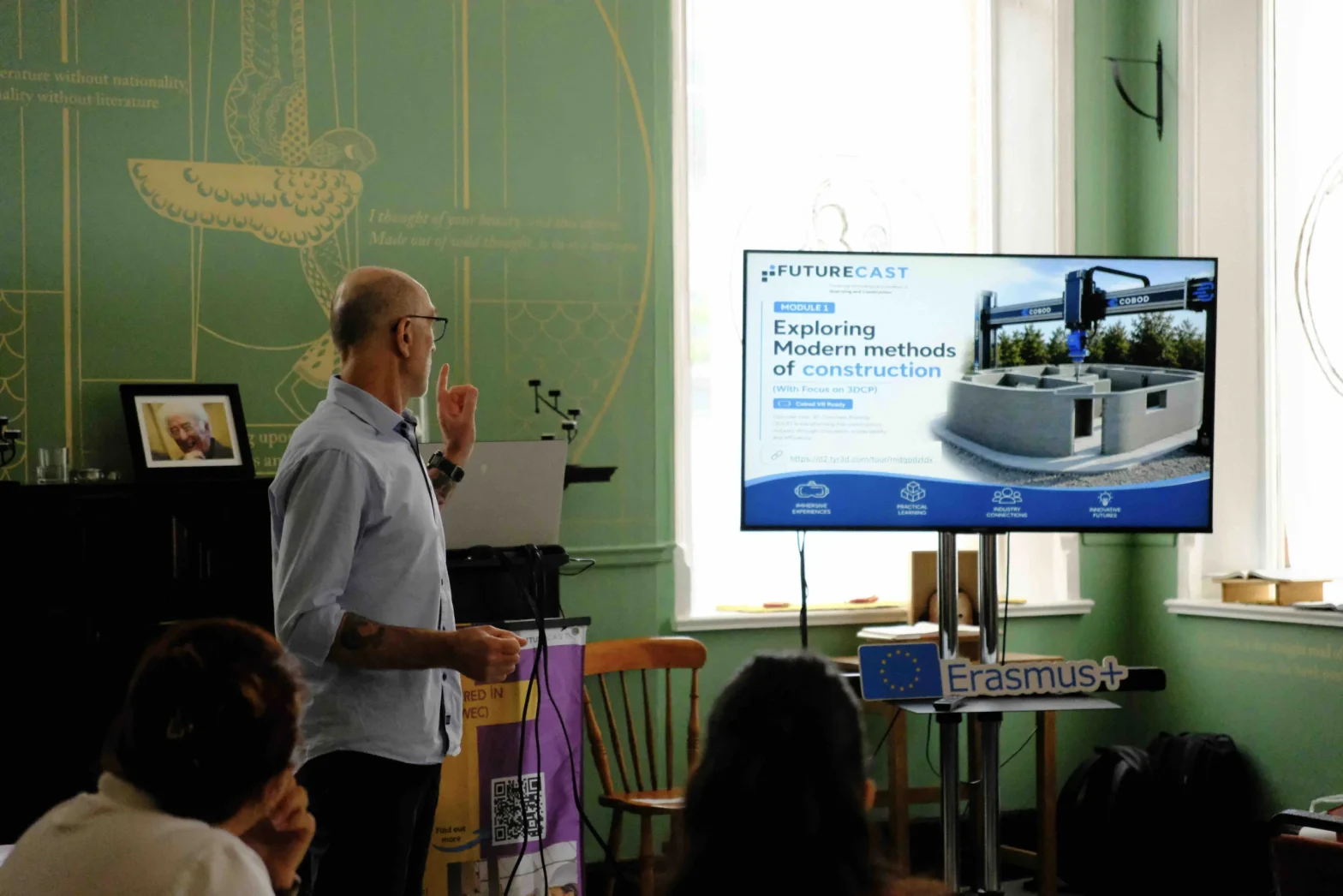
The WEC project’s curriculum includes these topics precisely for this reason. The training week in Ireland showed, clearly and enthusiastically, that when people see what digital construction actually looks like, their ideas about the sector change. Often permanently.

Across Europe, women make up a small fraction of the construction workforce, and an even smaller share of construction business owners. In Bosnia and Herzegovina, as in most of the region, women who train as tradeswomen, engineers or site managers rarely go on to register their own company, bid for their own contracts, or hire their own crew. The pipeline that turns a skilled worker into a business owner exists for men almost by default; for women it has to be built deliberately.
This matters because entrepreneurship is not a side door into the construction sector – it is one of the most direct routes to real decision-making power within it. A woman who owns a contracting business, a specialist subcontracting firm or a construction consultancy is no longer negotiating for a seat at someone else’s table. She is setting the terms herself: which projects to take, who to hire, how the work is priced, and what kind of workplace culture the business will have. This article looks at what it actually takes to move from construction skills to a construction business – and why that move deserves far more support than it currently gets.
Employment gives women in construction a wage and a trade. Business ownership gives them something different: control. Owning a business means deciding which clients to work with, setting your own prices instead of accepting someone else’s, and building a company culture that does not require you to be “one of the boys” to be respected.
It also multiplies impact beyond one career. A woman-led construction or renovation business creates jobs, and it tends to create them differently – with more flexible site practices, more visible female role models, and more openness to hiring other women into trades and technical roles. Every additional woman-owned firm in the sector chips away at the assumption that construction businesses are, by default, run by men.
Technical competence – knowing how to lay block, manage a renovation, read a structural drawing, or run an electrical installation – is necessary but not sufficient to run a business. Turning a trade into a company means adding an entirely separate skill set: pricing and estimating jobs accurately, understanding cash flow and payment terms, managing subcontractors and suppliers, meeting licensing, insurance and health-and-safety obligations, and marketing a business in a sector that still runs largely on word of mouth and personal reputation.
Most vocational training in construction stops at the technical skill. Very few programmes take a tradesperson the extra step to “and now here is how you price a job, write a quote, and register a company.” That gap is exactly where many capable women stall – not because they lack the trade skill, but because nobody ever taught them the business skill.
The barriers to entrepreneurship in construction are not gender-neutral. Access to start-up finance is harder for women across most sectors, and construction is especially capital-intensive – tools, vehicles, insurance and initial working capital all have to be found before the first invoice is paid. Access to a professional network is harder too: much of construction business still runs on informal referrals between contractors, subcontractors and suppliers who have known each other for years, and a woman entering that network for the first time is starting from outside it.
There is also a credibility barrier that male founders rarely face in the same way. A new construction business run by a woman is more likely to be asked, implicitly or explicitly, to prove it can actually deliver, before it is trusted with a contract. And finally, there is the practical barrier of role models: it is difficult to picture yourself running a construction firm when you have never met a woman who does.
| On the ground |
|---|
| A qualified tiler who has worked steadily as an employee for eight years wants to go independent, but has never written a quote, does not know what public liability insurance costs, and has no one in her network to ask. She is not lacking skill – she is lacking the business literacy and the contacts that would have come automatically to a male colleague with the same trade experience. Closing that gap is a training problem, not a talent problem. |
Three things consistently make the difference between a woman who starts a construction business and one who never does: finance she can actually access, a mentor who has been through it, and a first real opportunity to bid.
Finance means knowing which grants, loans, guarantee schemes or EU and national support programmes exist specifically for women-owned or newly-established businesses, and how to apply for them – information that is rarely taught alongside a trade qualification. Mentorship means a working relationship with someone, ideally another woman, who already runs a construction business and can explain, honestly, what the first two years actually look like: the client who does not pay on time, the supplier who assumes she is “just picking something up for the boss,” the tender she nearly did not submit because she was not sure she was allowed to.
Market opportunities matter just as much. Public procurement rules in many EU countries increasingly include social-value or diversity criteria that can favour women-owned businesses in tendering – but only for founders who know these mechanisms exist and how to use them. Connecting emerging women entrepreneurs to this information is one of the highest-value, lowest-cost interventions available to trainers and business-support organisations.
In a sector where the next job usually comes from the last client’s recommendation, reputation is the real currency of a construction business. For a new woman-owned firm, every completed project is doing double duty: delivering the work, and quietly proving that a woman-led business is a safe, competent choice for the next client too.
This makes consistency and communication disproportionately important in the early years. Clear contracts, realistic timelines, transparent pricing and reliable delivery build the kind of reputation that eventually replaces the need to prove anything at all. Founders who invest early in simple systems – written quotes, basic bookkeeping, a short client follow-up after every job – tend to convert that first hard-won contract into a second, and then a pipeline.
Moving from tradesperson to business owner is rarely one leap – it is a series of deliberate steps:
Entrepreneurship in construction is not reserved for those who already have capital, contacts and confidence – it is a set of skills and steps that can be taught, supported and practised, in exactly the way a trade is taught and practised. Closing the gap between “skilled worker” and “business owner” for women in construction is one of the most concrete ways the sector can become more balanced, not only in who is on site, but in who decides what gets built, by whom, and on what terms.

When discussing the future of construction, conversations often focus on digitalisation, sustainability, modern building techniques, and emerging technologies. Equally important, although less visible, is another transformation taking place across the sector: the evolution of workplace culture. As construction companies seek to address labour shortages, attract new talent, and remain competitive, creating workplaces where people from different backgrounds can contribute and thrive has become an important organisational priority.
Across Europe and the Western Balkans, increasing the participation of women in construction has become a key objective for industry, policymakers, and vocational education providers alike. Recruiting more women is an essential step towards achieving greater gender balance, but long-term progress depends on much more than recruitment alone. Employees are more likely to remain, develop their careers, and contribute their knowledge when they work in environments characterised by trust, fairness, respect, and equal opportunities. Workplace culture therefore becomes a determining factor in whether diversity initiatives lead to meaningful and lasting change.
For many years, discussions about gender equality were primarily framed as matters of social responsibility or legal compliance. Today, organisations increasingly recognise inclusive workplace culture as a strategic business asset.
Employee retention has become a significant challenge across almost every industry, including construction. Recruiting and onboarding new employees requires considerable financial and organisational investment, while high turnover disrupts productivity, team cohesion, and knowledge transfer. At the same time, employee engagement continues to decline globally. According to Gallup’s State of the Global Workplace 2026 report, only 20% of employees worldwide are engaged at work, with low engagement estimated to cost the global economy approximately 10 trillion US dollars in lost productivity each year. Gallup’s research consistently shows that engaged employees contribute to higher productivity, improved profitability, fewer safety incidents, and lower staff turnover.
For construction companies, where projects depend on close collaboration, effective communication, and high safety standards, retaining skilled professionals is particularly valuable. Creating an environment where employees feel respected, supported, and able to contribute their ideas strengthens organisational stability and helps companies remain attractive employers in an increasingly competitive labour market.
Inclusive workplaces also create favourable conditions for innovation. Diverse teams bring different perspectives, experiences, and approaches to problem-solving, leading to more creative solutions and better decision-making. Research by the Boston Consulting Group found that organisations with more diverse management teams generated higher innovation-related revenues, while studies by McKinsey & Company continue to demonstrate positive relationships between diversity and organisational performance.
Although organisational culture is often discussed in broad terms, employees experience it through everyday interactions. It is reflected in how new colleagues are welcomed, how meetings are conducted, how responsibilities are allocated, how feedback is provided, and how leaders respond when challenges arise.
The WEC Digital Toolkit approaches inclusive workplace culture from precisely this practical perspective. Rather than treating inclusion as a single policy, it encourages organisations to examine multiple dimensions of organisational life, including leadership and accountability, recruitment and onboarding, workplace facilities, day-to-day communication, career development, fair reward systems, reporting mechanisms, and organisational transparency. Together, these elements shape employees’ everyday experiences and influence whether they feel they genuinely belong within the organisation.
Similarly, creating an inclusive workplace requires more than preventing discrimination. Organisations also need to recognise unconscious bias, distinguish between bias, discrimination, and harassment, establish clear reporting procedures, and ensure that employees understand both their rights and available support mechanisms. These preventive measures contribute to building psychological safety and mutual trust throughout the organisation.
Modern construction projects increasingly involve multicultural teams composed of professionals from different countries, languages, generations, and educational backgrounds. As workforce diversity expands, communication itself becomes an important professional competence.
Attitudes towards gender roles are not formed in isolation. They develop through cultural norms, social expectations, education, and previous experiences. Consequently, assumptions about leadership, authority, collaboration, or suitable occupations for women and men may vary considerably between individuals. These differences do not necessarily create conflict; however, when they remain unrecognised, they can contribute to misunderstandings, exclusion, and reduced trust within teams.
For this reason, gender equality and intercultural communication should not be viewed as separate organisational priorities. They reinforce one another. Inclusive communication encourages employees to listen actively, avoid assumptions, recognise different perspectives, and respond respectfully even when misunderstandings occur. Such behaviours strengthen team cohesion and create an environment in which employees feel comfortable sharing ideas, asking questions, and contributing their expertise.
Research has repeatedly shown that psychologically safe teams perform more effectively because employees are more willing to communicate openly, learn from mistakes, and participate in continuous improvement. These qualities are particularly valuable within construction environments, where collaboration and effective communication directly influence quality, safety, and project outcomes.
One of the most common misconceptions surrounding gender equality initiatives is the assumption that success can be measured simply by increasing the number of women entering the sector. Recruitment is undoubtedly important, but it represents only the beginning of organisational change.
When employees enter workplaces where opportunities are unequal, communication is dismissive, career progression lacks transparency, or everyday interactions reinforce stereotypes, retaining talent becomes increasingly difficult. In such environments, organisations may successfully recruit more women while simultaneously experiencing higher turnover because the workplace has not adapted to support a more diverse workforce.
This challenge becomes even more significant in multicultural organisations. Employees who feel respected, included, and fairly treated are more likely to develop trust in colleagues and leaders, collaborate effectively, and build long-term careers within the organisation. Conversely, environments characterised by misunderstanding, exclusion, or persistent bias often experience lower engagement and higher employee turnover.
An inclusive workplace therefore benefits everyone, not only women. Transparent recruitment processes, equitable access to training, well-designed personal protective equipment, respectful communication, fair promotion opportunities, and effective reporting mechanisms improve working conditions for the entire workforce while strengthening organisational performance.
Vocational education and training providers have an important role in supporting this cultural transformation. Technical competence remains fundamental, yet technical skills alone are no longer sufficient for today’s construction professionals.
Graduates entering the sector increasingly work within multidisciplinary and multicultural teams, communicate with clients and stakeholders from diverse backgrounds, and participate in collaborative problem-solving throughout complex construction projects. Alongside technical expertise, they require communication skills, cultural awareness, teamwork, ethical decision-making, and inclusive leadership competencies.
The WEC project supports this broader understanding of professional competence by providing educators, trainers, and companies with practical learning resources that encourage reflection on workplace culture and equip learners with tools for creating more inclusive organisations. By integrating these topics into vocational education, future professionals become better prepared for the realities of an evolving construction industry.
Construction is undergoing significant transformation. Advances in technology, changing workforce demographics, and increasing international collaboration are reshaping both the skills required and the ways in which people work together. Within this context, workplace culture becomes an important factor influencing whether organisations can successfully attract, retain, and develop diverse talent.
Creating more inclusive construction workplaces is a gradual organisational process that extends well beyond recruitment. It requires leadership commitment, everyday respectful communication, transparent organisational practices, and an environment where people from different genders and cultural backgrounds can contribute with confidence. By supporting companies and vocational education providers in developing these capabilities, the WEC project contributes to building a construction sector that is better prepared for the social and professional challenges of the future.

In the west of Ireland, in a further education college in Sligo, something quietly significant is happening. A Level 5 course in Construction Technology with Renewable Energy is preparing learners: mature students, career changers, people returning to education, for a construction sector that is greener, more technical and more open than it has ever been before.
What makes this course interesting from a WEC perspective isn’t just what it teaches. It’s the gaps it has identified in its own design, and the honest, practical process underway to address them.
The QQI Level 5 Major Award in Construction Technology (5M5010), offered at Ballinode Campus in Sligo, is a broad and practically grounded programme.
Graduates progress to higher education with pathways to ATU Sligo, ATU Letterkenny and ATU Galway, or enter the workforce directly with industry-relevant, QQI-accredited qualifications.
What sets this course apart from a standard construction programme is the integration of renewable energy throughout the curriculum. The Renewable Energy Systems module (QQI 5N4975) is a core strand that connects sustainable construction practice to the realities of Ireland’s energy transition.
Learners study the full spectrum of renewable technologies and their real-world application in the built environment. They analyse cost-benefit and payback periods. They examine carbon emissions comparisons. They explore passive house design principles. And they do this alongside the practical, hands-on construction skills that form the backbone of the programme.
“The construction sector’s move toward net-zero building requires people who understand both how to build and why sustainable choices matter. This type of programmes is designed to produce exactly that kind of graduate.”
– WEC Interview participant, Ireland
One of the things the Irish WEC partner team has done well, and that makes this a genuine best practice story, is its honest assessment of where the curriculum falls short in its approach to gender inclusion and accessibility.
These gaps reflect challenges found in construction and VET programmes across Europe. What is noteworthy is the willingness to name them, document them, and use the WEC project as an opportunity to develop concrete responses.
The Sligo course is one example of what WEC believes is possible across all partner countries: a construction and VET sector that actively designs its programmes to welcome and support women, rather than hoping inclusion will happen by accident.
The approach “to audit what you have, name the gaps honestly, make targeted improvements using evidence-based tools” is replicable. It doesn’t require a wholesale redesign of existing programmes. It requires intentionality, the right framework, and a willingness to look honestly at what currently exists.

The construction sector is changing faster than its education systems. Across Europe, new expectations around sustainability, energy efficiency, digital project management and safer building practices are reshaping what construction workers, engineers, architects, site managers and vocational learners need to know.
For years, construction education was built around classrooms, workshops and on-site learning. These remain essential. No digital tool can replace the experience of handling materials, reading a construction site or learning from skilled workers. But traditional training alone is no longer enough. The sector now needs people who can work with digital models, understand data, collaborate online, use Building Information Modelling (BIM), and adapt to new technologies throughout their careers.
This is where digital learning becomes more than an educational trend. It becomes a practical response to a real labour market need.
Construction is central to Europe’s green and digital transition. Buildings need to become more energy efficient. Infrastructure must be planned and maintained more sustainably. Public and private projects increasingly require digital coordination, transparent documentation and better lifecycle management.
At the same time, the sector faces persistent skills shortages. Many construction companies, especially small and medium-sized enterprises, struggle to release staff for long training programmes. Workers need flexible ways to learn while staying active in the labour market. Young people entering the sector need modern, attractive learning pathways. Trainers need tools that reflect how construction is actually changing.
Digital learning can help close this gap. Online modules, blended learning, micro-credentials, virtual simulations and BIM-based training allow learners to build knowledge in shorter, more targeted formats. They also make it easier to update skills continuously, rather than relying only on one qualification at the start of a career.
The most effective digital learning in construction is not simply putting lectures online. It connects theory with practical work.
A strong modern learning model may combine:
This blended approach is especially relevant for vocational education and training. Learners can study concepts online, practise them in workshops, and apply them in real or simulated construction settings. For adult learners and workers, short digital modules can make upskilling more realistic and less disruptive.
Among all digital tools, BIM has become one of the most important for construction education. BIM is not just software. It is a way of working that connects design, planning, construction, maintenance and collaboration across different professions.
For learners, BIM helps make construction more visible and understandable. It allows them to see how different building elements interact, how errors can be identified earlier, and how digital coordination can reduce waste, delays and safety risks.
For Europe, BIM also supports wider policy priorities. It is linked to productivity, public procurement, energy efficiency and the digitalisation of the built environment. For the Western Balkans, BIM offers a practical entry point into modern construction standards and stronger alignment with European practices.
The BIM4WB project is a useful example. Focused on Albania and Kosovo, it aims to integrate BIM into vocational education and training, develop BIM-focused curricula and training materials, and establish an online platform for continuous learning. This kind of initiative shows how digital construction education can be adapted to regional needs, rather than imported as a generic technology solution.
Some construction skills are difficult, expensive or risky to teach only in real-life settings. This is where simulation, virtual reality and augmented reality can add value.
Learners can practise site safety, identify hazards, explore construction sequencing or understand complex spatial relationships before entering a real site. These tools can be especially useful for younger learners, apprentices and workers who need to understand risks without being exposed to them too early.
However, VR and AR should not be treated as magic solutions. They require equipment, good learning design and trained educators. For many providers, especially in the Western Balkans, the best approach is not to buy expensive technology first. It is to identify where immersive learning solves a specific problem, such as safety training, site planning or energy-efficient renovation, and then pilot it carefully.
Construction skills are no longer acquired once and used unchanged for decades. New materials, digital tools, environmental standards and regulations mean that workers need regular upskilling.
Micro-credentials can support this shift. They recognise smaller units of learning, such as BIM basics, digital site documentation, energy-efficient renovation, AI literacy for construction, or digital collaboration tools. When designed well, they can help workers build a visible portfolio of skills over time.
This is particularly important for SMEs. Smaller companies may not have the capacity to send workers to long training programmes, but they can benefit from short, targeted and recognised learning opportunities.
The risk is that micro-credentials become fragmented or low quality. To avoid this, they should be linked to clear learning outcomes, quality assurance and national or European qualification frameworks where possible.
The Western Balkans face both a challenge and an opportunity. The region is moving closer to EU standards and markets, while also dealing with gaps in digital infrastructure, advanced digital skills and business adoption of new technologies.
For construction, this matters directly. If workers, VET schools, universities and companies are not prepared for digital construction methods, the region risks falling behind in competitiveness, quality standards and cross-border cooperation. But if digital learning is introduced strategically, it can help modernise the sector, strengthen employability and support alignment with European practices.
The priority should not be to copy the most expensive models from elsewhere. A more realistic pathway would start with:
This would allow the Western Balkans to build capacity step by step, while still connecting to European trends.
Digital learning should not be reduced to software. The real goal is better learning, better work and better construction outcomes.
For learners, digital tools can make construction more engaging and easier to understand. For educators, they can support more flexible teaching methods. For companies, they can improve productivity, safety and quality. For public authorities, they can support greener and more transparent construction practices.
But the transition also brings risks. Some learners may lack devices or connectivity. Trainers may not feel confident using new tools. Smaller companies may see digital training as expensive or irrelevant. If these barriers are ignored, digitalisation may widen inequalities instead of reducing them.
This is why inclusive implementation matters. Digital construction education must be accessible, practical and connected to real work. It must support young learners, adult workers, SMEs and underrepresented groups, including women and people from disadvantaged backgrounds who are still too often excluded from construction careers.
For policymakers, digital construction skills should be treated as part of wider economic, green and education reform. Public procurement, qualification systems and funding programmes can all encourage the sector to modernise.
For education providers, the priority is to redesign learning, not just add technology. BIM, blended learning, project-based tasks and workplace learning should become central to construction programmes.
For companies, the message is clear: digital skills cannot be outsourced entirely to schools. Industry needs to provide real project cases, mentoring, equipment access and feedback on emerging skills needs.
For the Western Balkans, the opportunity is to use digital learning as a bridge between education reform, labour market needs and EU alignment. With the right investment, construction education can become more flexible, more practical and more future-ready.
The future of construction will not be built only with concrete, steel and timber. It will also be built with data, digital collaboration, sustainable thinking and continuous learning. Education systems that recognise this shift now will be better prepared to train the people who will design, build and renovate Europe’s next generation of homes, schools, infrastructure and public spaces.
Local Training Activity in Mostar: Bringing WEC to the Western Balkans
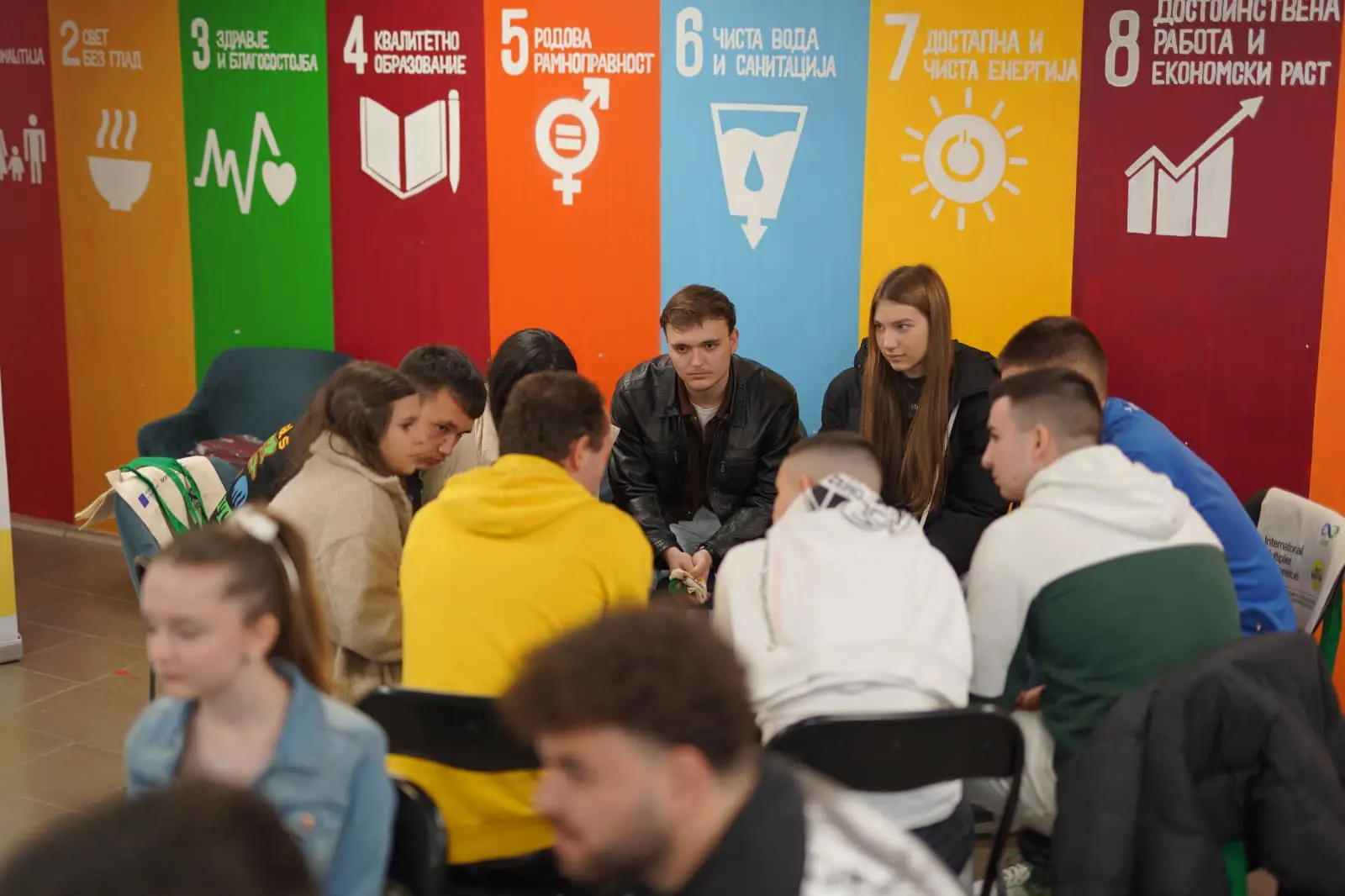
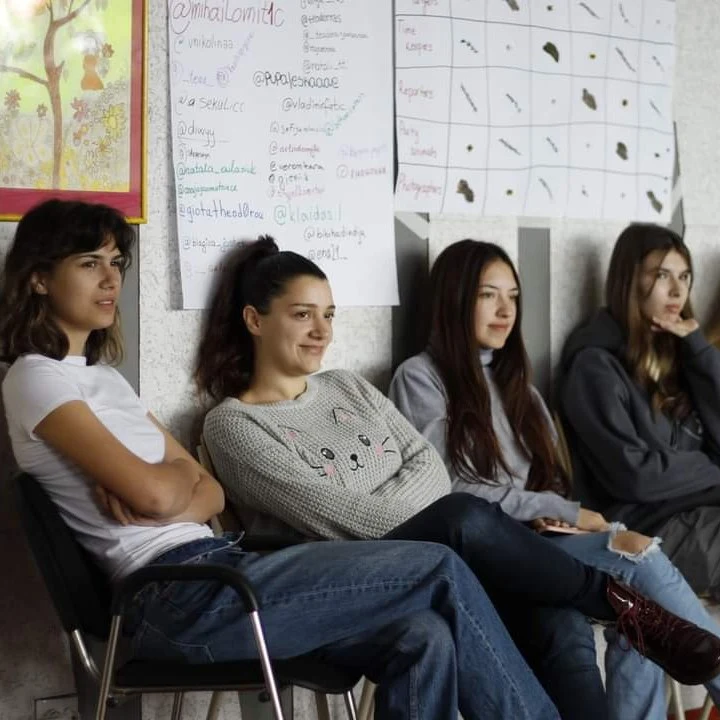
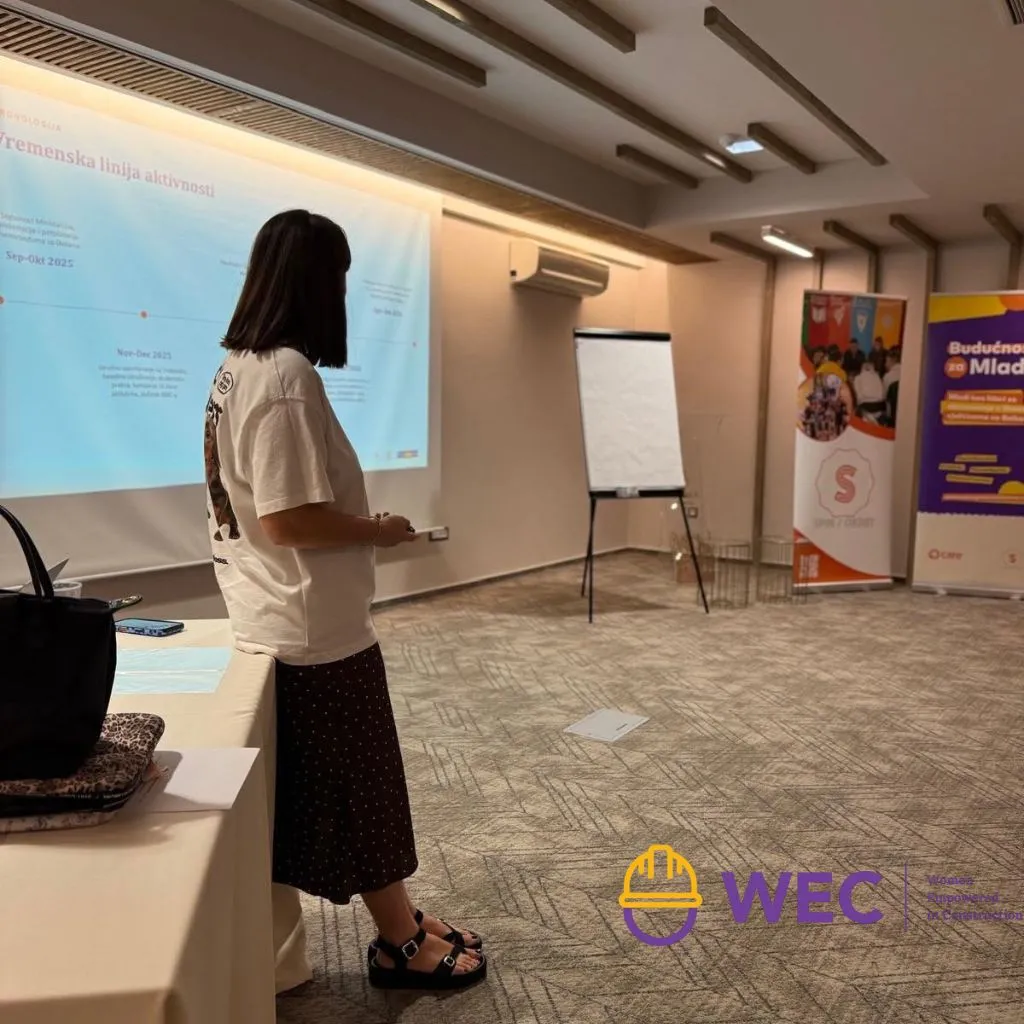
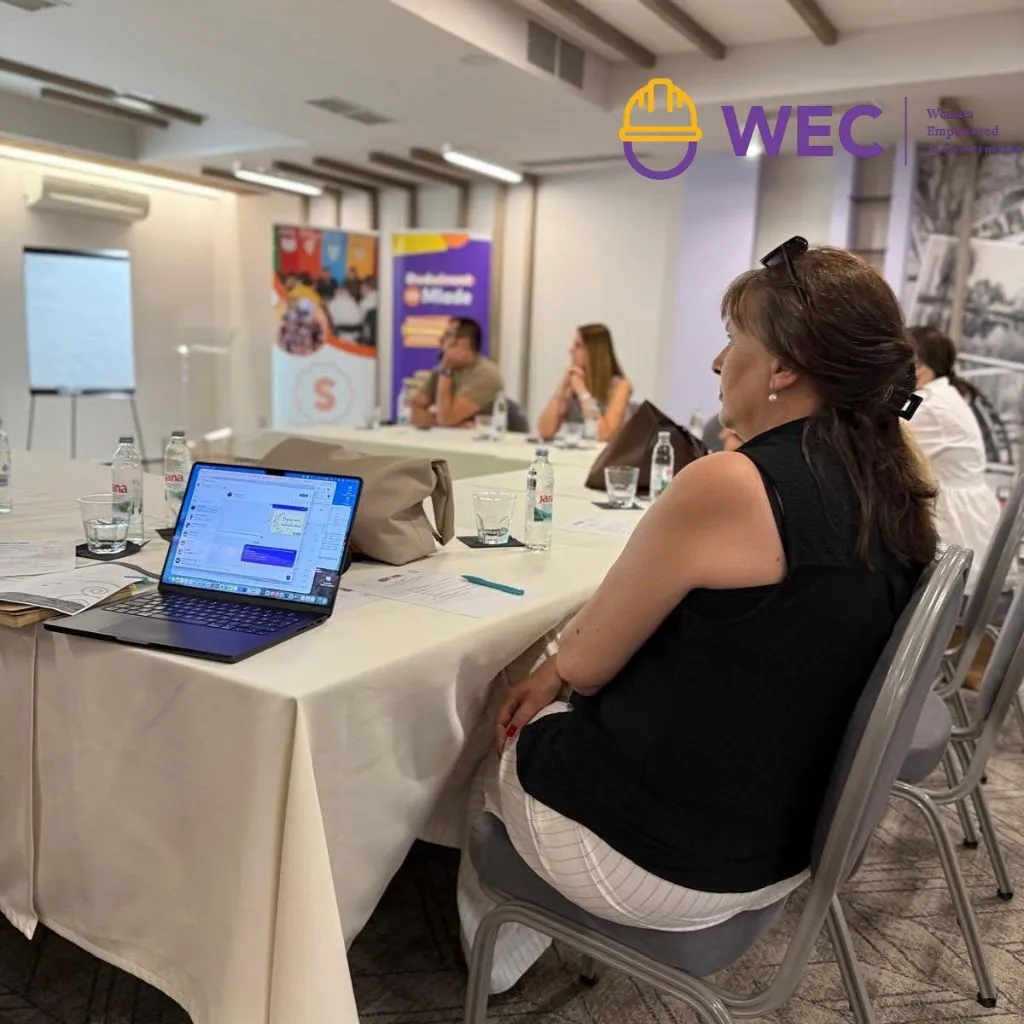
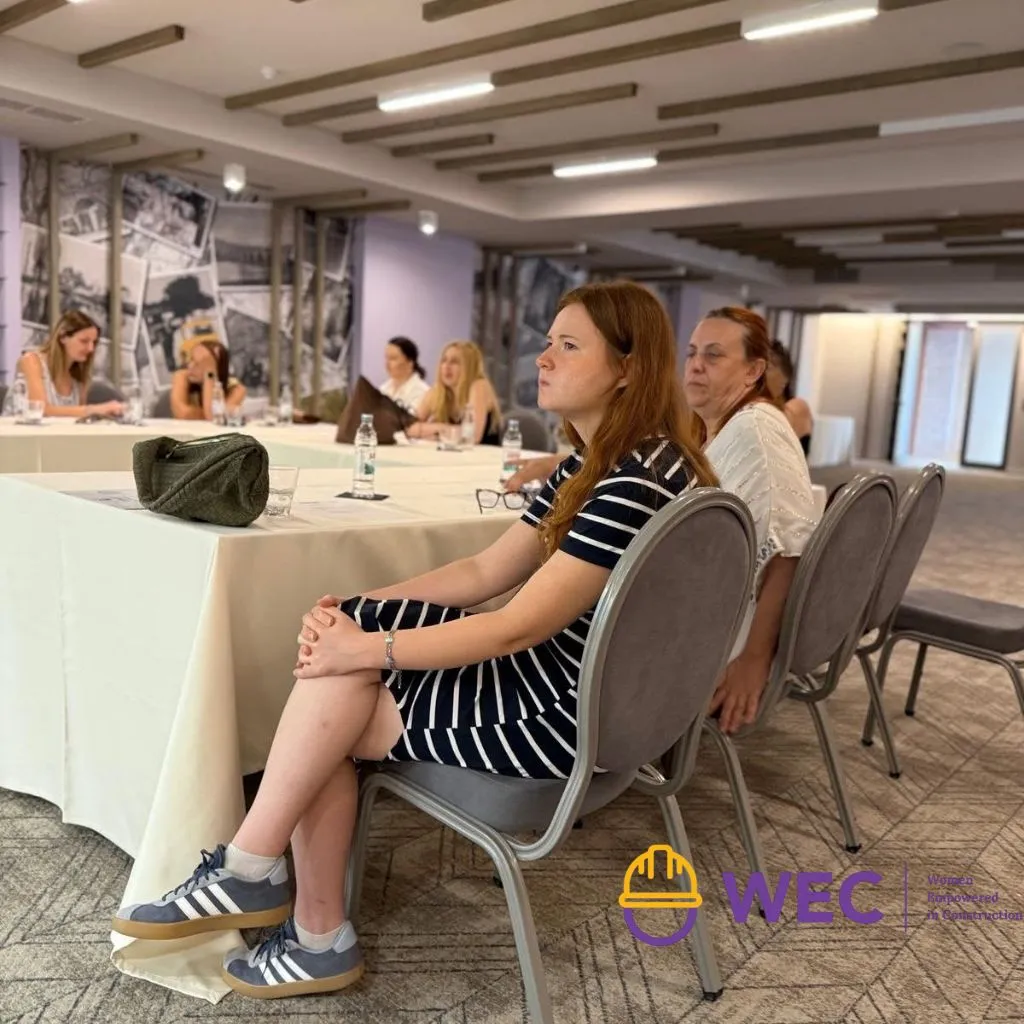
In late June and early July 2026, Okret – Spin organised a local training activity in Mostar, Bosnia and Herzegovina, as part of the Women Empowered in Construction (WEC) project. The four-day programme, held at Hotel Buna from 29 June to 2 July 2026, brought together VET educators and key institutional stakeholders from the Herzegovina-Neretva Canton region.
Who was in the room?
The training gathered 10 participants representing six vocational secondary schools from the HNK region, alongside a representative of the Ministry of Education, Science, Culture and Sport of Herzegovina-Neretva Canton and the Institute for Education Mostar (Zavod za školstvo). The group comprised 9 female and 1 male participant, reflecting the gender-inclusive spirit of the WEC project itself.
What did we do?
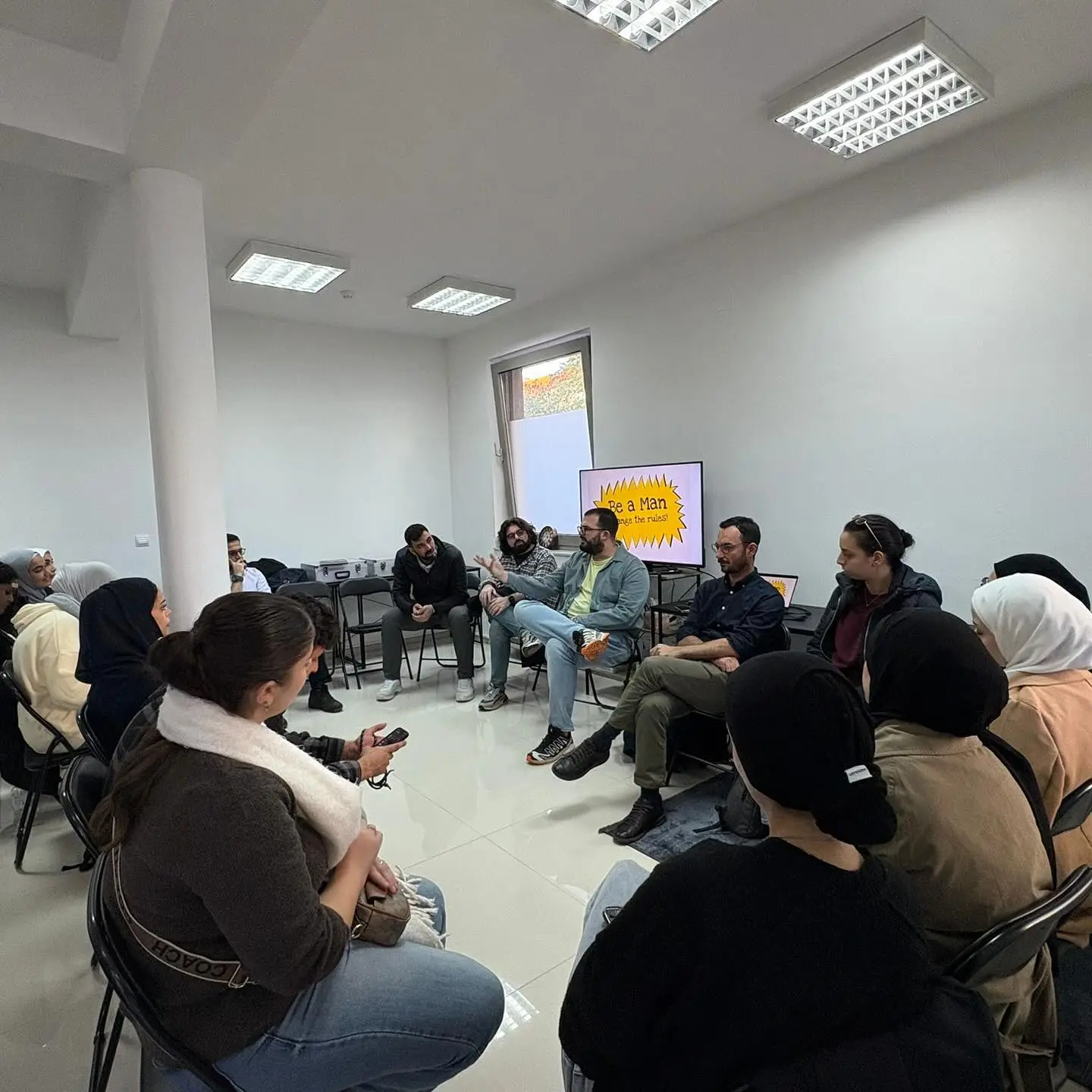
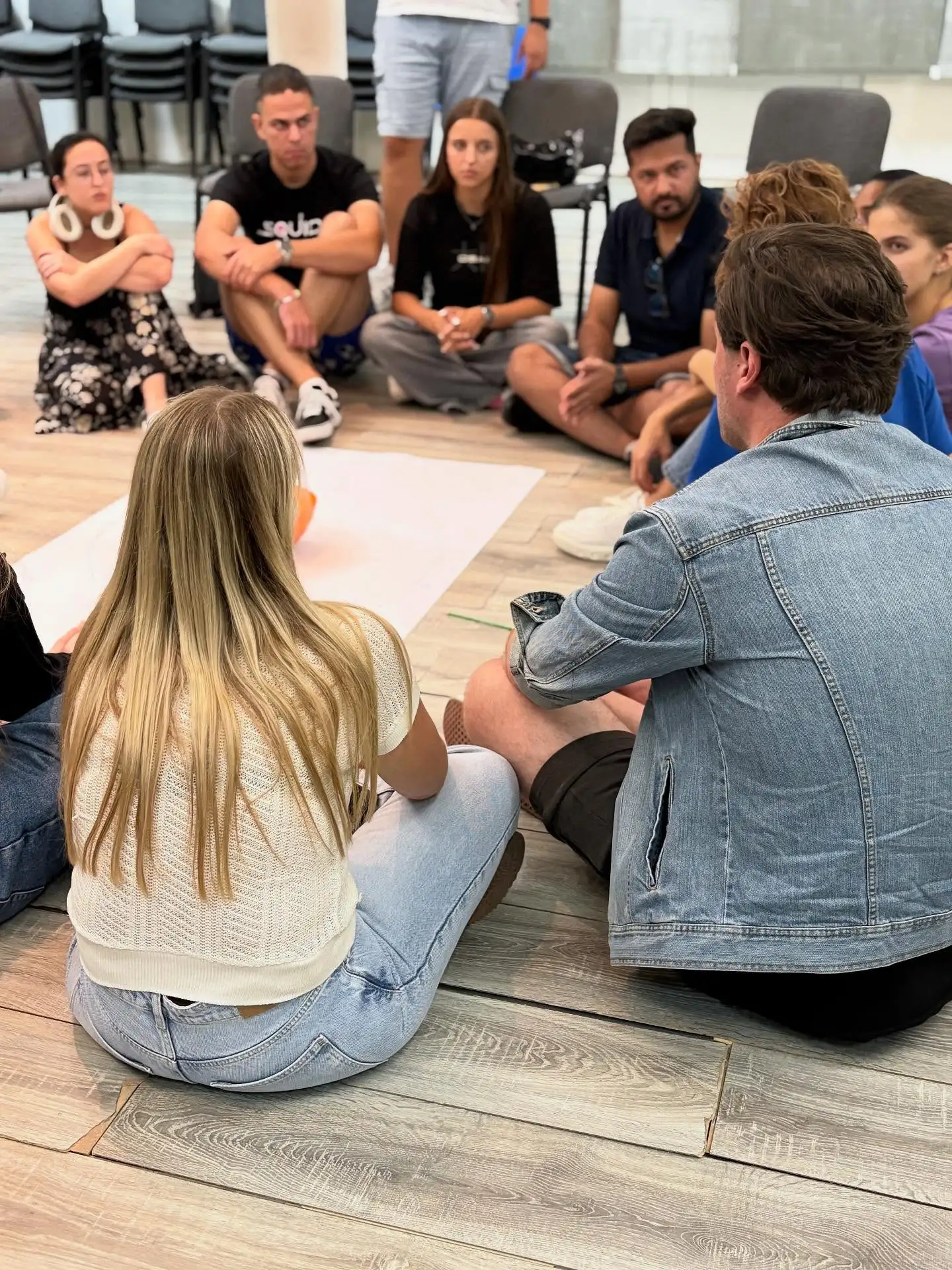
Over four working days, participants explored the four core themes of the WEC curriculum: gender equality and inclusive workplace culture; leadership, communication and professional identity; health, safety and wellbeing in construction; and innovation, digitalisation and entrepreneurship in the construction sector.
The programme was delivered using the same materials and methodological approach developed and tested during the WEC Learning, Teaching and Training Activity held in Ireland, ensuring consistency in quality and learning outcomes across the consortium. Facilitation drew heavily on experiential learning, scenario-based activities, peer exchange and reflective practice, modelling the inclusive pedagogical approaches promoted by the WEC curriculum.
Why does this matter?
Bosnia and Herzegovina is one of the countries where the gender gap in the construction sector is most pronounced. With women making up a tiny fraction of the active construction workforce, and with youth unemployment in the Mostar region among the highest in the country, the need for innovative, gender-sensitive VET education could not be more relevant.
By working directly with educators from vocational secondary schools, the Mostar training activity focused on building capacity where it matters most: in the classrooms and workshops where the next generation of construction professionals is being trained. Equipping VET educators with knowledge, tools and confidence to address gender equality and promote inclusive practices is a key step towards lasting change in the sector.
Voices from the room
Participants highlighted the practical and interactive nature of the sessions, the relevance of digital construction technologies to their everyday teaching, and the value of connecting with peers from across the HNK region. The presence of the Ministry of Education HNK and the Institute for Education Mostar opened a broader conversation about how WEC resources could inform future regional VET development.

Transforming construction education starts with equipping educators and trainers with the skills, confidence, and practical tools to make the sector more inclusive, innovative, and accessible to women. This Implementation, Evaluation and Evidence Report documents the Women Empowered in Construction (WEC) Learning, Teaching and Training Activity (LTTA), bringing together 21 participants from seven European and Western Balkan countries to test innovative learning approaches and validate the project’s emerging VET curriculum.
Drawing on six days of experiential learning, industry engagement, international exchange, and participant evaluation, the report captures key achievements, learning outcomes, and evidence-based recommendations across gender equality, leadership, workplace wellbeing, digital construction technologies, and entrepreneurship. More than a record of training activities, it provides a practical foundation for refining inclusive educational resources, strengthening educators’ capacities, and turning gender equality commitments into meaningful change across Europe’s construction sector.

Funded by the European Union. Views and opinions expressed are however those of the author(s) only and do not necessarily reflect those of the European Union or the European Education and Culture Executive Agency (EACEA). Neither the European Union nor EACEA can be held responsible for them.