Your Rights at Work: Key Legal Frameworks in Construction

Your Rights at Work: Key Legal Frameworks in Construction

Knowing your legal rights is foundational. Across the European Union, a layered system of directives and national legislation protects workers from discrimination, harassment, and unsafe conditions. Understanding these frameworks empowers workers to recognise violations and gives employers clear standards to meet.


EU-Level Protections

The EU Gender Equality Directive (2006/54/EC) prohibits direct and indirect discrimination on grounds of sex in employment, vocational training, and pay. Article 157 of the Treaty on the Functioning of the EU (TFEU) enshrines the principle of equal pay for equal work, making gender-based pay gaps unlawful. The Work–Life Balance Directive (2019/1158) strengthens parental leave entitlements and supports flexible working arrangements for parents and carers of both sexes. The Framework Directive on Health and Safety (89/391/EEC) creates minimum standards for safe working conditions that apply across all sectors, including construction.


International Standards

Beyond EU law, international frameworks provide additional context and legitimacy. ILO Convention No. 100 (equal remuneration) and No. 111 (non-discrimination in employment and occupation) set global standards that most European states have ratified and are therefore legally bound to uphold. The UN Sustainable Development Goals — particularly SDG 5 (gender equality) and SDG 8 (decent work) — provide a broader policy framework that increasingly influences public procurement requirements, meaning that employers who fail on equality may lose access to public contracts.


Enforcement Routes

In practice, workers can access their rights through several routes. Internal grievance procedures are typically the first step and should be documented carefully. National labour inspectorates have powers to investigate workplaces and enforce legislation without requiring a worker to bring an individual claim. National equality bodies (such as the Equality Commission or equivalent) provide advice, can investigate complaints, and in some jurisdictions can initiate enforcement action. Employment tribunals or labour courts are the final resort for unresolved disputes. Many workers are unaware that they can access free or low-cost legal advice through trade unions, community legal centres, or publicly funded advice services.


Practical Steps for Workers

Understanding your rights is only useful if you can act on them. The most important practical steps are: read your contract carefully and ensure you understand your pay, hours, and entitlements; keep records of pay slips, written communications, and any incidents that might be relevant to a future complaint; know who in your organisation is responsible for equality and health and safety; and do not assume that a practice is legal simply because it is common. The fact that women in a company have always been paid less than men for equivalent work does not make it lawful — it makes it a potential class action.

Gallery

Recognising and Responding to Harassment at Work

Recognising and Responding to Harassment at Work

Harassment is one of the most commonly cited reasons women leave male-dominated workplaces. In construction, where work is often physical, site-based, and conducted in close-knit crews, it can take many forms — and it has serious legal, organisational, and human consequences.


Types of Workplace Harassment

Harassment at work encompasses a broad range of behaviours: verbal comments about appearance or gender, sexually explicit jokes, deliberate exclusion from briefings or social events, unwanted physical contact, and the sustained creation of a hostile or humiliating environment. Sexual harassment is a specific and particularly serious category — unwanted conduct of a sexual nature that violates dignity or creates an intimidating atmosphere. All of these behaviours are both unlawful under EU and national law, and deeply damaging to the individuals who experience them and to team cohesion more broadly.


Legal Obligations and Rights

Under EU law (the Gender Equality Directive and the Framework Directive on Health and Safety), employers have a legal duty to prevent harassment, investigate complaints promptly, protect complainants from retaliation, and take effective corrective action. Workers have a corresponding right to a safe working environment and to raise concerns without fear of victimisation. These are not soft commitments — failure to meet them exposes organisations to employment tribunal claims, regulatory fines, and reputational damage. Workers who experience harassment and are then retaliated against for reporting it have strong grounds for legal redress.


Bystander Intervention

Research consistently identifies bystander intervention as one of the most effective tools for reducing workplace harassment. When colleagues speak up — calmly, directly, and proportionately — they signal that harmful behaviour is not the accepted norm. Effective bystander responses include direct address (‘That comment was inappropriate’), distraction (changing the subject or redirecting attention), delegation (alerting a supervisor or HR), and delayed support (checking in with the person targeted afterwards). Bystanders do not need to escalate or confront aggressively; they need to make clear, through words or actions, that the behaviour is not invisible and not acceptable.


What to Do if You Experience Harassment

For individuals experiencing harassment, the first practical step is documentation: recording dates, times, locations, witnesses, and the exact words or actions involved. This record is essential if a formal complaint becomes necessary. Most organisations have an internal grievance procedure that should be the first port of call; if this fails or if the harasser is the manager, external routes include national equality bodies, labour inspectorates, and — ultimately — employment tribunals. Many countries provide free legal advice for workers unfamiliar with these processes. Prevention remains better than cure: organisations with clear reporting pathways, regular training, and visible senior commitment to respect at work have measurably lower rates of harassment.

Gallery

Why Gender Equality in Construction Is a Structural Issue

Why Gender Equality in Construction Is a Structural Issue

Women make up only 8–14% of the construction workforce across most European countries — a figure that drops even lower in site-based technical roles. This is not a coincidence, nor is it the result of lack of interest or ability. It is the product of deep structural barriers that have shaped the industry for generations.


Three Levels of Barrier

Researchers distinguish between three interconnected levels of barrier to gender equality. At the individual level, girls and young women often lack visible role models in the trades, reducing their sense of belonging before they even apply for training or work. At the social-norms level, pervasive assumptions about ‘men’s work’ and ‘women’s work’ shape occupational choices long before any employer makes a hiring decision. At the institutional level, recruitment networks, site facilities, ill-fitting personal protective equipment (PPE), and informal hiring practices all reinforce exclusion — even when no individual intends to discriminate.


Formal vs. Substantive Equality

A critical distinction for anyone working in or advocating for gender equality is the difference between formal and substantive equality. Formal equality means that anti-discrimination laws exist and apply equally to all. Substantive equality means that access, retention, progression, and safety are genuinely equal in practice. A woman hired and then forced to leave because there is no changing facility, or because her protective equipment does not fit, demonstrates that formal rules and lived reality can diverge sharply. Closing this gap is the core challenge of gender equality work in construction.


Why It Matters for the Whole Industry

The construction sector faces serious and well-documented skills shortages across Europe. Expanding the talent pool is not only an equity imperative — it is an economic necessity. Research consistently shows that diverse teams make better decisions, produce fewer errors, and are more innovative. A sector that excludes roughly half the population from many of its roles is limiting its own potential. Recognising gender inequality as a systemic problem, rather than an individual failing, is the essential first step toward building a more sustainable, resilient, and inclusive industry for everyone.


What Structural Change Looks Like

Structural change requires action at all three levels simultaneously. At the individual level, it means mentoring programmes, visibility campaigns, and outreach to schools. At the norms level, it means confronting assumptions in team culture, language, and media representation. At the institutional level, it means revising recruitment criteria, auditing pay structures, redesigning welfare facilities, and ensuring that PPE is available in sizes that fit all workers. No single intervention is sufficient — genuine change requires sustained effort across all these dimensions.

Gallery

Stereotypes and Occupational Segregation: How Bias Shapes Careers

Stereotypes and Occupational Segregation: How Bias Shapes Careers

Occupational segregation — the clustering of different groups into different jobs — is one of the most persistent features of the construction labour market. Understanding how stereotypes drive this pattern is essential for anyone who wants to challenge it.


What Stereotypes Do

Stereotypes are simplified, generalised beliefs about what members of a group are typically like. Gender stereotypes link femininity with care, precision, and support — and masculinity with physicality, authority, and risk tolerance. When applied to occupations, these beliefs operate as invisible filters: a woman who expresses interest in structural engineering may be gently redirected toward interior design; a female site manager may find her decisions questioned more readily than those of a male peer with equivalent experience. These filters rarely appear as explicit rules; they operate through tone, expectation, and the small daily decisions that accumulate into patterns.


Implicit Bias: The Unconscious Factor

Implicit bias refers to unconscious preferences that operate even among people who consciously reject discrimination. Studies using identical CVs with male and female names consistently show that evaluators — regardless of their own gender — rate the male candidate as more competent for technical roles. Awareness of implicit bias does not eliminate it, but it is the starting point for fairer processes. Structured interviews, blind shortlisting, standardised scoring criteria, and diverse hiring panels have all been shown to reduce the influence of bias on decisions.


How Segregation Reproduces Itself

Occupational segregation is self-reinforcing. When few women are visible in a role, fewer young women can imagine themselves in it — reducing the pipeline of applicants. When women are concentrated in lower-paid, lower-status positions, the average earnings gap widens, reinforcing the narrative that construction is a ‘man’s industry.’ When women who do enter face isolation, harassment, or limited progression, attrition rates remain high, and the visible representation stays low. Breaking this cycle requires not just changing attitudes but changing the structural conditions that allow the cycle to continue.


Challenging Segregation in Practice

Effective responses to occupational segregation operate at multiple levels. At the sector level, industry bodies can run positive visibility campaigns and set diversity targets for training programmes. At the employer level, organisations can audit their workforce composition, review whether job descriptions use unnecessarily gendered language, and actively recruit from underrepresented groups. At the individual level, colleagues can become allies by challenging stereotyping comments, recommending women for stretch assignments, and refusing to treat a woman’s success as surprising. Progress is slow without systemic change, but cultural shifts begin with individual acts of courage.

Gallery

Changing the face of the construction industry: reconstructing with girls and women in mind.

Changing the face of the construction industry: reconstructing with girls and women in mind.

The construction industry is changing fast. Across Western Balkans and Europe, it is facing a growing demand for workers, new technologies, and increasing pressure to become greener and more sustainable. But while so many things are evolving, one thing has remained largely the same: who gets to be part of this industry. The simple answer is men.


Walk onto most construction sites today, and the picture is very familiar. Men dominate nearly every role, particularly in on-site and technical positions, while women remain far less visible and are often concentrated in different, usually non-site-based roles. This is not just a perception. Evidence from the WEC research on labour shortages and gender imbalances in the construction industry across the Western Balkans confirms a significant gap in participation, showing that women make up only a small share of the workforce and are rarely present in core technical and trade roles.


For a long time, the focus has been on how to bring more women into construction. But through the Women Empowered in Construction initiative, a different question is being asked. Instead of asking why women are not entering the sector, the focus shifts to understanding how the sector itself is organised in ways that make it harder for girls and women to enter, stay, and progress.


A new curriculum to reconstruct the construction industry mindset


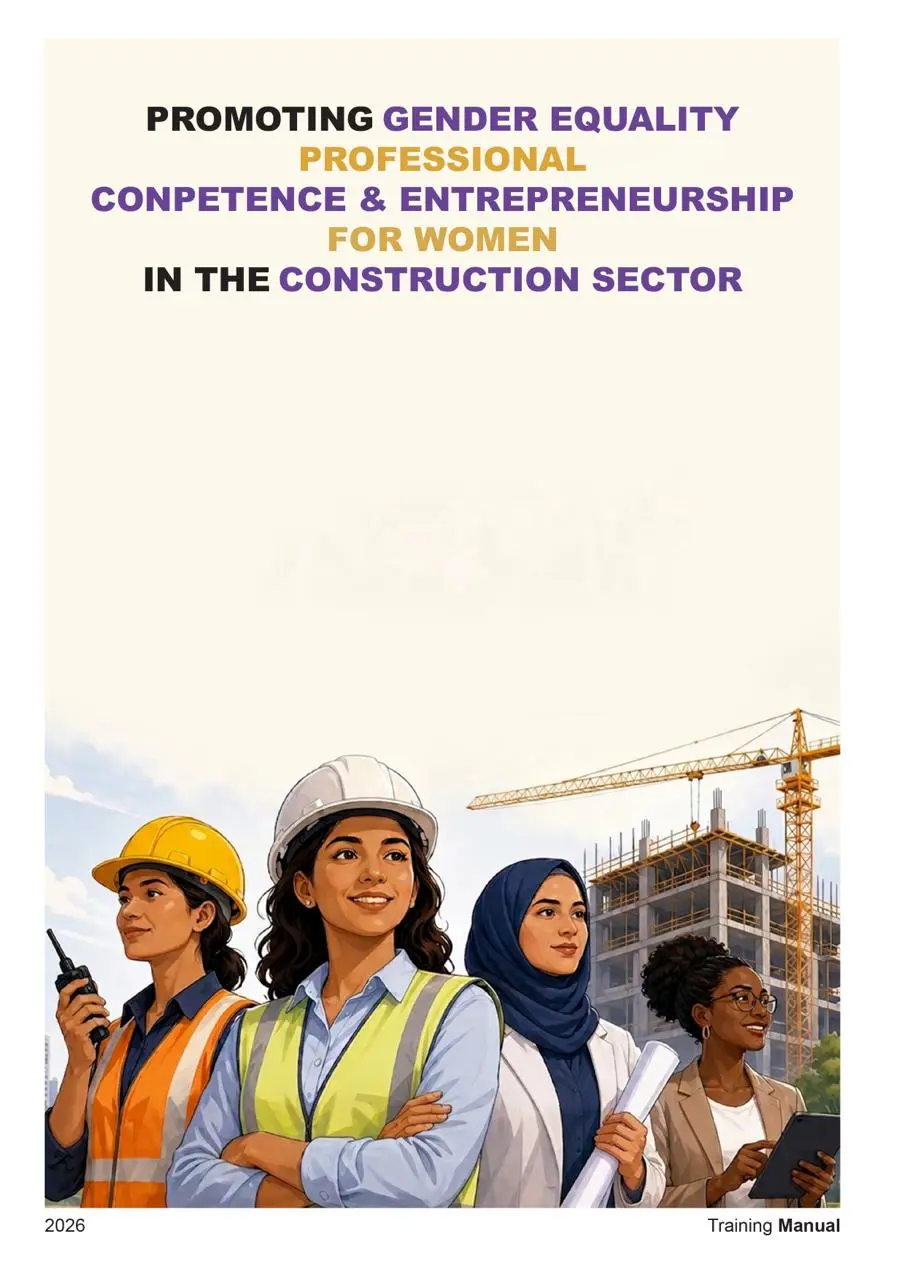
CRCA Albania team of experts are leading the work to finalise the new learning curricula: Promoting Gender Equality, Professional Competence and Entrepreneurship for Women in the Construction Sector – which contains four main modules. The curriculum is designed to equip learners with the knowledge, practical skills, and critical awareness needed to promote gender equality and inclusive workplace culture in the construction sector, while systematically addressing the structural barriers, stereotypes, and institutional practices that limit women’s participation, retention, and progression in the industry.


At the first module, one of the first moments in the training curricula is surprisingly simple. Participants are asked what comes to mind when they hear the words “construction worker.” Most people imagine a man on a building site, wearing a helmet and doing heavy physical work. That image is not an accident. It reflects how deeply gender roles are built into the way we think about construction as a profession.


The curriculum builds on this by showing that inequality in construction is not about ability but rather providing opportunities. It is about systems. It is about how training is designed, how jobs are offered, how teams work, how workplaces are organised, the role of technology in construction and how all can facilitate a transition into more inclusive industry. When you start looking at it this way, the issue becomes clearer and, importantly, more solvable.


The Barriers we don’t see


Many of the barriers’ girls and women face are not obvious at first. They are not always about skills or qualifications. They are often about mindset and of course everyday conditions. For example, a woman may leave a job in a construction site not because she cannot do it, but because there is no proper changing space for her. Equipment might not fit her properly. Opportunities might be shared informally; through networks she is not part of. She might be given support tasks instead of technical ones, limiting her experience and future progression.


What becomes clear through the training is that when the same obstacles appear repeatedly, they are not individual problems. They become structural issues that need to be addressed. And if something is structural, it means it can be changed.


From “Fitting In” to reconstructing the system: change is possible


As in any industry, the construction one evolves with time. New knowledge and technology bring new advancements, and people are at the core of such transformation. The advancements lead to an important shift in thinking. Instead of expecting women to adapt to construction as it is, the focus turns to how the sector itself needs to evolve. This is where gender sensitivity becomes practical, not theoretical. It should start by asking very simple but important questions. Are workplaces designed for everyone? Are people treated with respect? Are opportunities shared fairly? Are safety standards truly inclusive? How about personal safety?


Culture matters more than policies


A key lesson from the curriculum is that change does not happen only through policies. You can have rules in place, but what really shapes people’s experience is the culture on site. It is in everyday interactions, in who is listened to, in how mistakes are treated, and in whether people feel included or isolated. In many cases, exclusion is not intentional. Views and perceptions about women’s role in most of the so-called “old” or traditional industries were not as inclusive and open as they are now. The development of society itself led to a better understanding of human rights, equality, division of labour, gender roles, and overall women’s role in society.


What once was seen as normal behaviour today is not. This is also because, over time, the patterns of exclusion had real consequences. They affect who stays, who leaves, and who advances in employment opportunities.


That is why the planned training do not stop at awareness. They focus on building practical skills. Participants will learn how to recognise unfair situations, understand their rights, communicate clearly, and work effectively in diverse teams. They also learn that change does not always require big actions. Sometimes it starts with noticing something that was previously ignored or speaking up in a way that feels safe and constructive.


Learning to see, speak, and act


This matters not only for individuals, but for the future of the industry. The construction industry, as we have mentioned in this article, needs to reconstruct itself. It needs more people, more skills, more technology, better tools and new perspectives. Workplaces remain difficult or unwelcoming for a part of the population, the sector risks losing valuable talent.


Gender equality, in this context, is not just about fairness. It is about making sure the industry can adapt and grow. It is about creating environments where people can contribute fully and stay in the profession. Changing the face of construction will not happen overnight. But it starts with small, practical shifts. It starts with seeing things differently, questioning what has always been accepted, and creating space for change.


The way forward


At its core, the WEC curriculum is about more than training, it is about opening and shaping the construction sector. Across its modules, from understanding gender equality and workplace culture, to building professional skills, strengthening entrepreneurship, and supporting pathways into employment, the aim is to prepare individuals who are not only technically capable, but also aware, confident, and ready to contribute to more inclusive and sustainable workplaces. By the end of the learning journey, the expectation is simple but powerful: that participants leave not just with new knowledge, but with the ability to see the sector differently, navigate it more confidently, and play an active role in changing it for the better.


Construction is not only about buildings and infrastructure. It is about people. The future of the sector depends very much on who can be part of it, and under what conditions. It’s time for the construction industry to reconstruct itself with girls and women on it.

Gallery

Women and Girls in Construction: Why Gender Equality Is Not a “Social Issue,” but a Development Imperative

Women and Girls in Construction: Why Gender Equality Is Not a “Social Issue,” but a Development Imperative

By: Altin Hazizaj, Director, CRCA Albania


The construction industry continues to be seen as a “natural” space for men. From the very launch of the WEC Project supported by the European Union’s Erasmus+ programme, meeting after meeting with institutions, construction business associations, vocational schools, partner organisations, friends and colleagues, this perception has been dominant. I often feel that when people first hear the title of our project, they imagine women and girls carrying heavy cement bags on their backs, lifting steel bars that could break their spine, or eating lunch seated high above the ground like in the famous 1932 photo in Manhattan, New York: Lunch atop a Skyscraper.


As a feminist, in my mind everything is possible for everyone, women or men, and no one should face any barrier in engaging in the work and profession they choose for themselves. But the reality of the construction industry speaks for itself. Only 15 percent of those employed in the construction sector in Albania are women and girls. Most of them work in office-based positions such as economists, lawyers, or architects, often coming from university backgrounds, while mid- and lower-level technical positions are dominated by boys and men.


This reality does not exist because women lack ability. It exists because for decades this industry has been built on strong gender stereotypes, work traditions, and organisational cultures that have excluded women, often without even noticing it. This is not only a social injustice. It is a real loss for the labour market, for the economy, and for the sector itself.


Today, construction, like many other industries in Albania, faces serious labour shortages. At the same time, the sector is going through a transition toward new technologies and higher safety and quality standards. Many jobs once considered physically demanding on construction sites have been eased and almost transformed into mechanical processes due to advances in technology and machinery. In this context, excluding women is no longer merely an unacceptable prejudice. It is irrational.


Invisible stereotypes with daily consequences


Many girls and women do not exclude construction because they dislike it, but because from an early age they are told that “it is not for them.” This happens within families, in schools, in career guidance, and even in vocational training programmes themselves. The message is subtle but constant: this sector was not designed with girls and women at its centre. In many conversations we have had with parents in the context of our youth work, their refusal to allow their daughters to enter construction is immediate. It is a firm no, without discussion, even when we deconstruct the types of jobs a girl or woman could perform. Only when we mention that such work could be office-based do they seem to calm down and consider changing their minds.


These stereotypes do not disappear once a girl or woman enters the labour market. They appear in the way tasks are assigned, how work is evaluated, how safety is treated on construction sites, and how team relationships are built. For this reason, gender equality in construction cannot be reduced to statistics or quotas. It requires cultural change. During the preparation of the study on the inclusion of women and girls in the construction industry, when representatives of construction companies were asked how often they conducted training on gender equality and diversity, safety, care and respect in the workplace for men and women, and personal safety, all of them responded that they did not conduct such training.


Gender equality as a professional competence


One of the core ideas behind the WEC initiative and curriculum is that gender equality is not a theoretical “add-on,” but an essential professional competence. Understanding bias, building respectful communication, knowing labour rights, and creating safe and inclusive work environments are skills just as important as technical ones.


In this sense, building an inclusive workplace culture does not benefit only women. It improves collaboration, reduces conflict, increases safety, and strengthens the overall quality of work for everyone. A construction site that respects gender standards is usually a more professional site, one with integrity and real opportunities for professional growth.


From exclusion to empowerment


The WEC project sees the empowerment of women and girls in construction as a process closely linked to self-confidence, awareness of rights, and the development of skills to speak up, negotiate, and lead. Many women in this sector do not lack ability. They lack space to express their abilities. Data collected during the study show that an increasing number of girls and women are studying and graduating in fields closely related to the construction industry. The number of women as high-level professionals, especially architects, lawyers, and engineers, has been steadily increasing year after year.


As in any other profession, wherever women are treated as equal professionals rather than as exceptions, they bring new perspectives, attention to detail, a stronger approach to safety, and often more collaborative work models. These are not “female” qualities. They are good professional qualities that the business sector as a whole, and construction in particular, urgently need in order to grow and strengthen.


Change begins with knowledge and training


If we want to see more girls and women in construction, change must begin long before employment. Vocational training programmes must be built on the realities and needs of women, not on the outdated idea that one approach fits everyone. This means adopting new and participatory methodologies, offering real-life examples of how change can happen, promoting positive role models, and ensuring trainers are aware of the gender dimensions of work.


The new curriculum that CRCA Albania is preparing within the WEC project aims precisely at this: not only to prepare new workers, but to prepare confident, informed professionals capable of claiming their place in a sector that needs them. The more women and girls become involved in the construction industry, the more we will see this industry grow and strengthen.


In conclusion


Gender equality in construction is not an issue that concerns only “women.” It is about the quality of work, economic development, and the achievement of social justice. An industry that excludes half of its human potential cannot be modern, competitive, or sustainable. Investing in the inclusion of women and girls in construction means investing in a stronger, fairer, and more sustainable sector for our country.

Gallery

Who is building Albania? The gender gap in the country’s most powerful industry

Who is building Albania? The gender gap in the country’s most powerful industry

Albania’s skyline is changing. New residential towers, tourism infrastructure, roads, and urban developments are reshaping cities and coastal areas at an unprecedented pace. Construction is one of the most powerful engines of the national economy, contributing significantly to GDP and driving investment and growth. But behind cranes and concrete lies a fundamental question: who is building Albania?


Our WEC National Research on Women and Girls’ participation to the construction sector, funded by EU Erasmus+ and implemented by CRCA Albania, set out to answer a related question. Why, in one of the country’s most important industries, contributing to almost 15 percent of Albania’s GDP, women are still largely absent?


The study aimed to assess the level of participation of women and girls in construction-related education and employment in Albania. It examined the structural, cultural, and institutional barriers that limit their inclusion and explored how gender imbalance intersects with the sector’s growing labour shortage.


The research combined national statistical data, policy analysis, and consultations with employers, vocational schools, experts, and young people. The findings of the research show that women and girls represent only a small share of the construction workforce in Albania, typically between three and ten percent. Even within that limited percentage, most are employed in administrative, financial, or design-related roles rather than in technical or site-based positions. The presence of women in fieldwork remains minimal.


While women make up the majority of university graduates nationally, only a small proportion choose studies related to engineering, manufacturing, or construction. In vocational education and training, girls represent a minority of students enrolled in construction programs. Although their numbers have slowly increased in recent years, the gap remains significant.


At the same time, the sector faces a serious labour shortage. Employers consistently report difficulties in recruiting skilled workers such as masons, welders, electricians, and civil engineers. Emigration, demographic changes, and declining interest in vocational careers among youth have intensified these challenges.


The research identified several structural and cultural barriers. Construction is still widely perceived as a “man’s profession.” Girls and women are rarely encouraged to pursue technical education, and families often guide them toward office-based or traditionally “safer” career paths. As a result, many young women never seriously consider construction as an option. Women may also experience isolation in male-dominated environments and have limited access to mentorship or professional networks.


Construction accounts for a substantial share of Albania’s economic activity. Yet its workforce does not reflect the full talent pool of the country by giving equal opportunities to participate, contribute and benefit to men and women. If Albania wants a construction sector that is competitive, resilient, and future-oriented, it must rethink who gets to build it.


The WEC project builds on these research findings by developing innovative, gender-responsive vocational education and training programmes designed to open real pathways for women and girls into construction and help modernise one of the country’s most powerful industries.

Gallery

WEC project for the empowerment of women and girls in the construction sector presented

WEC project for the empowerment of women and girls in the construction sector presented

Tirana, March 5, 2026 – Within the framework of the meeting of the Thematic Group “Employment, Skills and Decent Work”, organized by the Ministry of Economy in Albania within the framework of the negotiations for integration into the European Union, which was held on March 5, 2026 in Tirana, CRCA Albania was invited to present the WEC project – Empowering Women and Girls in the Construction Industry, an initiative that aims to empower girls and women to build their careers in the construction sector.


The meeting brought together representatives of public institutions, civil society organizations, development partners, and labor market experts, who discussed the challenges and opportunities to increase women’s participation in traditionally male-dominated professions, such as construction and infrastructure.


The representative of CRCA Albania, Mr. Altin Hazizaj, during the presentation of the WEC project, emphasized the importance of developing professional skills for women and girls through vocational education and training (VET) programs, mentoring by female professionals in the sector and creating new opportunities for employment and entrepreneurship in construction. The project also aims to contribute to changing social perceptions and promoting a more inclusive and equitable construction sector.


As part of the project, CRCA is leading the development of four vocational training modules, creating partnerships with construction companies, and promoting success stories of women working in the sector. Through these activities, the project aims to open up more opportunities for girls and women to develop technical skills, gain practical experience, and build sustainable careers.


The WEC project represents an important step towards the economic empowerment of women and towards the creation of a more equal and inclusive labor market in Albania. In the coming months, the project partners will work on the development of concrete training programs and the inclusion of women and girls who want to build their professional future in the construction sector.

Open Call: Join the WEC Training in Ireland in May 2026

Open Call: Join the WEC Training in Ireland in May 2026

Empowering Women in Construction through Skills, Leadership & Innovation


The Women Empowered in Construction (WEC) project is proud to announce an open call for participants for our upcoming Learning, Teaching and Training Activity in Ireland, taking place in May 2026.


This a week intensive international training will bring together 20+ educators and trainers from across Europe and the Western Balkans to strengthen gender equality, professional competence, leadership, occupational safety, and innovation in the construction sector.


Why This Training Matters


Across Europe, the construction sector faces both a skills shortage and a persistent gender gap. Women remain underrepresented in construction-related professions, often facing structural barriers, stereotypes, and limited access to leadership pathways.


The WEC training program is designed as a transformative learning experience, directly based on the Curriculum Framework, developed by 6 partners organisations.


It combines:

  • Gender equality and workplace culture
  • Professional development and leadership
  • Occupational health and safety from a gender perspective
  • Digitalisation, sustainability, and entrepreneurship in construction


This is not just a training – it is a space for reflection, exchange, and concrete action planning.


Training Format & Structure

Future Cast will host the training in Sligo & Manorhamilton, Ireland.

Duration: 25-30 May 2026


Working structure:

    • 3 sessions per day (90 minutes each)
    • Non-formal, experiential learning approach
    • Daily reflection and evaluation rounds
  • Interactive methods: group work, simulations, role-play, case studies, national sharing sessions


The programme follows a progressive flow

Day 1–2: Foundations & Context

Day 3–4: Leadership & Professional Identity

Day 5: Health & Safety through a gender-inclusive lens

Day 6: Innovation & Sustainability

Day 7: Entrepreneurship & Action Planning


Who Can Apply?


We are looking for:

  • Educators and trainers in Vocational Education
  • Professionals involved in vocational training delivery and committed to gender equality in construction


Participants should have experience in VET or educational delivery and be motivated to implement follow-up activities in their home countries.


What You Will Gain


By joining the LTTA, participants will:

  • Strengthen competences in gender-inclusive VET delivery
  • Gain practical tools for safer and more inclusive construction environments
  • Enhance leadership and mentoring skills
  • Learn about digital and green transformation in construction
  • Build a strong European professional network
  • Receive certification upon completion


Financial Conditions


Participation costs (travel, accommodation, and subsistence) are covered according to the Erasmus+ project budget and partner allocations.

Each partner organisation will coordinate the selection of its three participants.


How to Apply


Please get in touch with a representative of the partner organisation in your country directly.


Building the Future of Construction Together


The WEC Training event is more than a training activity – it is part of a broader mission to create a more inclusive, innovative, and sustainable construction sector across Europe and the Western Balkans.

If you are ready to contribute to systemic change and strengthen your professional impact, we look forward to welcoming you in Ireland.

Gallery

Presenting the Map of Existing VET Programmes and Resources in Montenegro

Presenting the Map of Existing VET Programmes and Resources in Montenegro

Introduction


Within the WEC project, partners mapped existing VET programmes and resources related to construction. This mapping identifies educational pathways and support mechanisms, with a focus on attracting girls and women to construction-related careers.


Construction-related VET pathways in Montenegro


Montenegro offers construction-related vocational education primarily through secondary vocational schools and training programmes that prepare students for technical and skilled occupations. These pathways typically combine theoretical learning with practical training. Programmes often include topics such as building construction, surveying/geodesy basics, technical drawing, construction materials, finishing works, and health and safety practices.


For students, VET can serve as a direct route to employment or a foundation for further education and professional development in engineering, architecture, and related fields.


Practical learning and school–industry cooperation


A key element of VET is practical learning. Schools collaborate with companies and institutions to provide work-based learning opportunities, internships, site visits, and exposure to real projects. These collaborations help students connect classroom knowledge with real-life tasks, learn professional standards, and gain confidence.


Cooperation with industry partners such as Knauf Montenegro, Eurozox, ING Invest, Geoengineering Montenegro, and the Real Estate Administration enables students to gain real-world experience through site visits, internships, and mentoring.


Existing resources that support learning and career choice


The mapping identified several categories of resources that support construction education and career orientation in Montenegro: 

  • School-based resources: workshops, labs, teaching materials, and teacher expertise in construction-related subjects.
  • Industry resources: company visits, mentoring, practical training placements, and equipment support.
  • Career guidance activities: school open days, presentations, and counselling that help students understand occupational pathways.


Digital and learning resources: online materials and tools that can be used to support modern learning approaches and attract students through engaging content.


Why mapping matters for women in construction


Mapping programmes and resources helps identify opportunities to make construction education more attractive to girls. When schools and communities clearly communicate that construction includes diverse roles—technical, creative, digital, and managerial—girls are more likely to consider it.


The mapping also helps identify gaps, such as limited visibility of female role models, insufficient targeted outreach, or lack of tailored support during practical training.


Next steps within WEC


The results of this mapping will support the next phases of the WEC project, including curriculum-related work, outreach activities, and communication campaigns. In Montenegro, partners will use the mapping to strengthen cooperation with industry, improve how construction careers are presented to girls, and ensure that practical learning environments are supportive, inclusive, and inspiring.

Gallery